













Buyer Guides
Surface Finish for Flex PCBs: Durability & Compatibility
Jun
I’ve seen this fail in a very boring way.
A flex PCB looks fine after fabrication. AOI passes. Electrical test passes. The pads are shiny enough, the supplier says “no problem,” the buyer relaxes, and then the SMT line starts reporting weak wetting, dirty-looking pads, or connector fingers that don’t survive the real product cycle. Nice report. Bad build.
Here’s the ugly truth: flex PCB surface finish is not a beauty layer. It’s the last chemical decision sitting between bare copper and real-world abuse.
And flex is rude.
A rigid PCB mostly stays where it is. A flex circuit bends, folds, rubs inside housings, slides into connectors, and sometimes lives next to heat, sweat, vibration, flux residue, pressure marks, and impatient assembly workers who are already behind schedule. So when someone asks, “What’s the best surface finish for flex PCB assembly?” I don’t answer with one finish.
I ask where it bends.
The Finish Is Not the Product, but It Can Kill the Product
A surface finish protects exposed copper and gives the assembler something solderable or contact-ready. Simple sentence. Complicated reality.
If the finish is too delicate, storage eats it. If it’s too expensive, procurement complains. If it’s too hard or applied in the wrong zone, it can become a mechanical problem. If it’s chosen only because “we used ENIG last time,” then congratulations — that’s not engineering, that’s muscle memory.
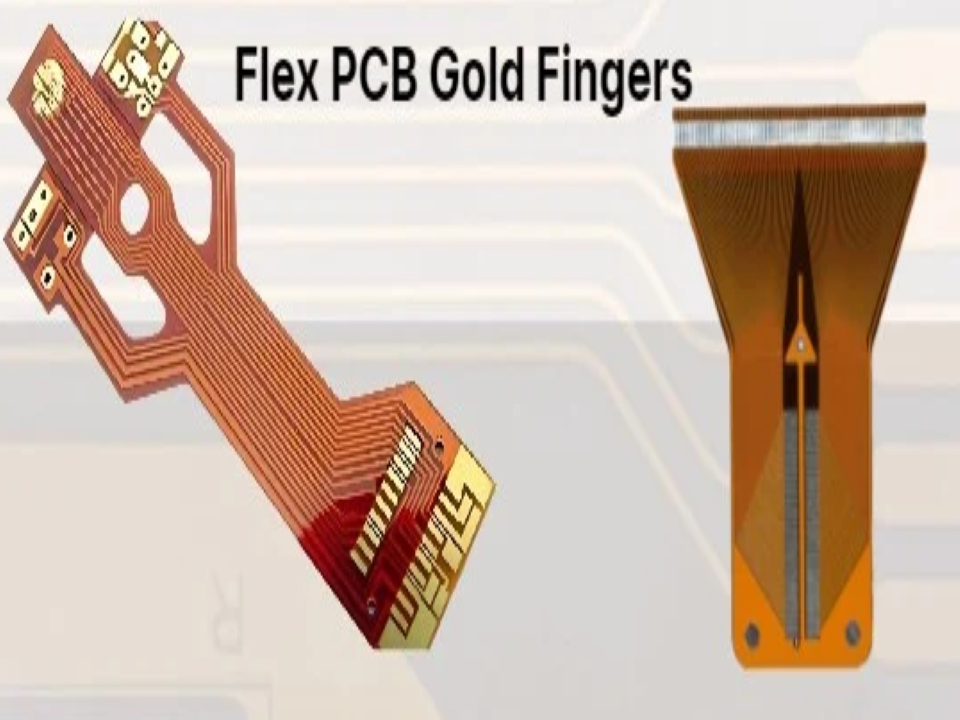
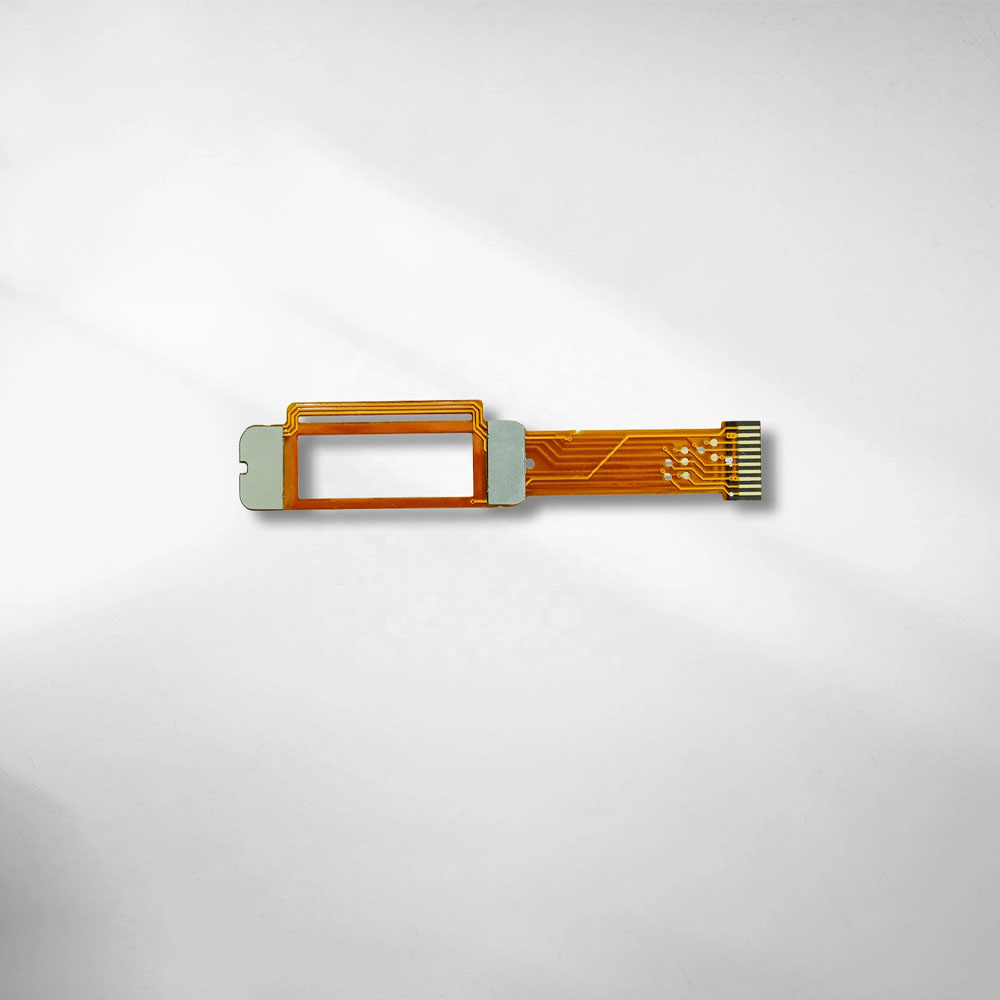
On a custom flexible circuit PCB with gold pads, the finish decision should already be tied to pad use: solder pad, connector pad, test pad, exposed contact, or cosmetic gold area. Those are not the same job.
Not even close.
ENIG: The Safe Choice Everyone Overuses
ENIG — electroless nickel immersion gold — is the finish people request when they want fewer arguments later.
I get it. It’s flat. It stores better than OSP. It works nicely with fine-pitch SMT, QFN, BGA, small pads, and export projects where the PCB may sit longer before assembly. If a customer doesn’t fully know their assembly timeline, ENIG often becomes the “please don’t embarrass me” finish.
But I frankly believe ENIG gets used too casually on flex.
The nickel layer is the part people forget. Nickel is useful as a barrier, yes, but it’s not copper-soft. In a solder pad area, fine. In an active bend area? That needs thought. If the flex tail bends once during installation, that’s one story. If it flexes repeatedly during product use, that’s another story entirely.
For a flexible polyimide FPC made for drone cable use, ENIG might be a good call around connector pads and SMT areas. But I’d still want to check the bend radius, coverlay opening, copper direction, and whether the plated area is sitting right where the mechanical stress is highest.
Tiny detail. Big headache.
OSP vs ENIG: Cheap Isn’t Always Dumb
OSP gets mocked because it’s cheap.
That’s lazy.
OSP — organic solderability preservative — can be perfectly reasonable when the PCB moves fast from fabrication to SMT. It’s thin, flat, lead-free, and cost-friendly. For high-volume builds with disciplined storage and one clean reflow cycle, OSP can be the right tool.
But OSP hates chaos.
Long storage? Not great. Multiple reflow cycles? Risky. Rough handling? Also bad. Someone opens the vacuum bag, checks the boards, reseals them badly, then assembly gets delayed for two weeks? Now you’re not saving money. You’re gambling with copper oxidation and solderability.
So OSP vs ENIG for flex PCB is not “cheap vs premium.” It’s “controlled process vs messy process.”
If the production schedule is tight and clean, OSP can work. If the PCB needs to survive cross-border shipping, uncertain SMT timing, customer-side delays, or prototype back-and-forth, ENIG starts looking less expensive than a failed batch.
Immersion Silver: Beautiful Until People Touch It Wrong
Immersion silver is one of those finishes that can behave very well in the right factory flow and very badly in a sloppy one.
It’s flat. It solders well. It has strong conductivity. For some signal-sensitive or fine-feature designs, it can make sense. But silver brings attitude. It doesn’t like sulfur exposure, fingerprints, poor packing, humidity, or casual warehouse habits.
And yes, people still touch boards wrong.
From my experience, immersion silver is less about chemistry and more about discipline. If the supplier, warehouse, EMS line, and customer all handle the boards properly, it can perform cleanly. If the project has vague storage rules and people keep asking “can we assemble these next month?” I get nervous.
A PCB prototype with flex circuit and control board may use immersion silver if the timeline is short and the assembly window is known. For slow-moving projects, I’d rather not pretend packaging alone can fix bad planning.
Immersion Tin: Flat, Useful, and Annoying When Timelines Slip
Immersion tin is not a bad finish.
It’s flat, solderable, and often cheaper than gold-based finishes. Fine-pitch pads can like it. Assemblers can use it. Buyers may like the price.
But tin has its own little traps — storage window, oxidation, intermetallic growth, and process sensitivity. It’s one of those finishes that asks the whole supply chain to behave. When everyone behaves, fine. When the boards sit too long or go through too much heat history, the margin shrinks.
I don’t hate immersion tin. I just don’t trust it blindly.
Use it when the SMT plan is clear. Avoid it when nobody can tell you whether assembly is next week, next month, or “after our customer confirms.”
Hard Gold: Stop Calling It “Just Gold”
This one annoys me.
Customers say “gold finish” as if ENIG and hard gold are the same thing. They aren’t. ENIG is usually for solderability and oxidation protection. Hard gold is for wear. Connector fingers. Keypad contacts. Sliding contacts. Repeated mating areas.
Different animal.
If your flex PCB plugs into a connector again and again, hard gold may be required in that contact zone. If your PCB only needs solder pads, hard gold is usually overkill and can create unnecessary cost. And if someone plates the wrong area because the drawing simply says “gold,” the factory may quote one thing while the product actually needs another.
For a flexible FPC prototype cable with gold finger pads, the drawing should spell out the finger finish, thickness expectation, and contact area clearly. Don’t leave it to email interpretation. Email interpretation is where specifications go to die.
ENEPIG: Expensive, But Sometimes the Adult Choice
ENEPIG sounds like a finish chosen by someone who has been hurt before.
Electroless nickel, electroless palladium, immersion gold. More layers. More cost. More process control. It’s often used when the design needs better compatibility across soldering, wire bonding, and contact functions.
Do most flex PCBs need ENEPIG? No.
Do some rigid-flex, medical, automotive, high-reliability, or mixed-assembly products justify it? Absolutely.
For a custom rigid-flex PCB used in automotive or medical applications, I wouldn’t choose ENEPIG because it sounds premium. I’d choose it only when the joining method, reliability target, wire bonding need, or customer acceptance standard actually points there.
Premium for no reason is just expensive confusion.
Rigid-Flex Makes the Finish Decision Messier
Rigid-flex is where lazy finish selection really starts to show.
You may have SMT parts on the rigid section, flex tails running into cramped mechanical areas, connector fingers at the end, and maybe impedance-controlled traces crossing zones that nobody wants to disturb. One finish may not be the whole answer.
A rigid-flex PCB for multi-module panels may need ENIG for SMT pads, hard gold for contact fingers, and careful keep-out thinking around dynamic bend areas. That’s not overthinking. That’s how you avoid turning a beautiful stack-up into a field return story.
And when the design gets denser — microvias, tight routing, multiple rigid islands, narrow FPC tails — a HDI rigid-flex PCB design with custom rigid-flex FPC needs finish review during DFM, not after the PO is already placed.
Too late is expensive.
Surface Finish Comparison for Flex PCBs
| Surface Finish | Best Use Case | Durability | Solderability | Storage Tolerance | Main Risk | Typical Cost Level |
|---|---|---|---|---|---|---|
| OSP | Fast-turn SMT flex circuits | Medium | Good if fresh | Low to medium | Short shelf life, handling sensitivity | Low |
| ENIG | Fine-pitch SMT, general high-reliability flex | High | Very good | High | Cost, nickel concerns in dynamic flex zones | Medium-high |
| Immersion Silver | Conductive pads, RF-sensitive designs | Medium | Very good | Medium | Tarnish, sulfur exposure, packaging control | Medium |
| Immersion Tin | Flat solder pads, controlled assembly window | Medium | Good | Medium-low | Tin oxidation, intermetallic growth | Medium |
| Hard Gold | Gold fingers, connector contacts, wear zones | Very high in contact areas | Poor choice for normal solder pads | High | Cost, selective plating control | High |
| ENEPIG | Wire bonding, premium rigid-flex, mixed joining | Very high | Excellent | High | Higher price, process complexity | Very high |
My Working Rule: Choose by Failure Mode, Not by Habit
I don’t start with finish names.
I start with failure modes.
Will the PCB oxidize before SMT? Will pads wet poorly after storage? Will connector fingers wear out? Will the flex bend in the plated zone? Will the customer rework the PCB twice and then blame the factory? Will the product live in heat, humidity, vibration, or sweat?
That last one matters more than people admit.
If the problem is storage risk, ENIG may beat OSP. If the problem is connector wear, hard gold belongs in the drawing. If the problem is wire bonding or high-reliability mixed joining, ENEPIG may deserve the money. If the problem is fast, clean, cost-sensitive assembly, OSP might be the smart pick.
So no, the best surface finish for flexible circuits is not always the most expensive one.
It’s the one that survives the actual job.
FAQ
What is the best surface finish for flex PCB assembly?
The best surface finish for flex PCB assembly is the finish that matches soldering method, storage time, bending behavior, and contact requirements; ENIG is often the safest general choice for fine-pitch SMT and export projects, while OSP can work well for fast assembly with controlled storage.
In plain factory language: ENIG buys process margin, OSP saves cost when the flow is tight, hard gold protects contact fingers, and ENEPIG is for the jobs where soldering, bonding, and reliability requirements start stepping on each other.
Is ENIG surface finish good for flex PCB?
ENIG surface finish is good for many flex PCB applications because it provides a flat soldering surface, strong oxidation resistance, and reliable performance for fine-pitch SMT assembly, but it should be used carefully around dynamic bending areas because the nickel layer is harder than copper.
I like ENIG for solder pads. I’m more cautious when someone places ENIG-heavy exposed copper right in a flexing section and says, “It should be okay.” Maybe. But “maybe” is not a process spec.
What is the difference between OSP and ENIG for flex PCB?
OSP is a thin organic coating that protects copper before soldering, while ENIG is a metallic nickel-gold finish that offers better shelf life, oxidation resistance, and fine-pitch assembly stability; OSP is cheaper, but ENIG is usually safer for longer storage and export projects.
OSP is for disciplined timing. ENIG is for more breathing room. If your boards go straight to SMT, OSP may be fine. If they travel, wait, get inspected, resealed, delayed, and then assembled, ENIG starts looking like cheap insurance.
Is immersion silver suitable for flexible PCB?
Immersion silver is suitable for flexible PCB when strong conductivity, flat pads, and good solderability are needed, but it requires careful packaging, clean handling, and controlled storage because silver can tarnish when exposed to sulfur, humidity, fingerprints, or poor warehouse conditions.
I’d use it when the supply chain is clean. I’d avoid it when nobody owns storage discipline. The finish can perform well, but bad handling can ruin that advantage before the board even reaches reflow.
When should hard gold be used on a flex PCB?
Hard gold should be used on flex PCB areas that face repeated mechanical contact, such as connector fingers, keypad contacts, sliding contacts, and high-wear mating surfaces; it is not normally used as a general solder pad finish because it is expensive and designed mainly for wear resistance.
Say “hard gold” clearly if you mean connector fingers. Don’t just write “gold.” That one lazy word can create quotation errors, plating confusion, and a very awkward conversation after the sample fails insertion testing.
How do I choose a durable surface finish for flexible circuits?
To choose a durable surface finish for flexible circuits, define the real stress first: soldering, storage, humidity, bending, contact wear, wire bonding, or multiple reflow cycles; then match the finish to that stress instead of choosing only by price or default factory recommendation.
My quick filter is simple: solder pads, contact pads, bend zones, storage window, heat cycles. Check those five things before approving the finish. It’s not fancy. It works.
Conclusion
If your flex PCB has fine-pitch SMT pads, gold fingers, repeated bending, uncertain storage, or mixed rigid-flex zones, don’t choose the surface finish by habit. Send MCHDIPCB the Gerber files, stack-up, application environment, and assembly plan — we’ll help check whether ENIG, OSP, immersion silver, immersion tin, hard gold, or ENEPIG makes the most sense before production starts.
