













Market Trends
PCB Pricing: How Volume Affects Manufacturing Cost
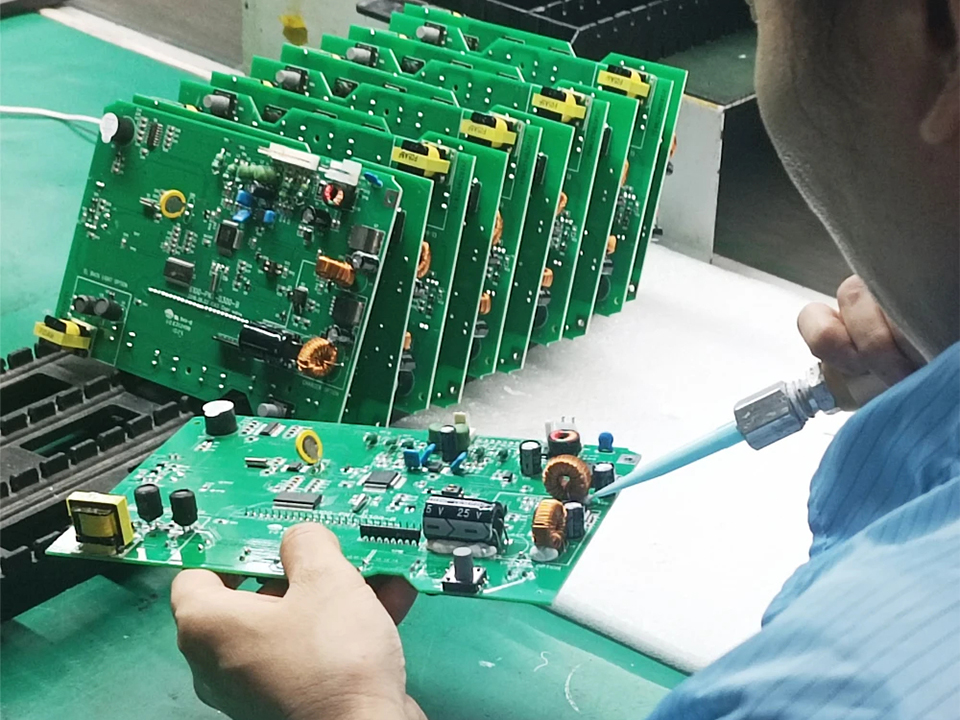
May
Volume exists.
That is the initial tough reality I inform procurement groups when they ask why a 1,000-piece published circuit card prices quote is not one-tenth of the 100-piece quote, because PCB prices is not a tidy spread sheet contour; it is a dirty collision in between fixed configuration, panel usage, laminate buying, line scheduling, evaluation worry, scrap risk, and the producer’s hunger for your future service.
So why does the quote still look so random?
Due to the fact that the majority of purchasers believe they are purchasing “boards.” They are not. They are buying factory time, design interest, chemistry control, copper, glass fiber, drill capacity, soldermask yield, surface coating security, electrical screening, product packaging, and the right to disrupt someone else’s manufacturing calendar.
And when volume modifications, each of those concealed bars actions.
The Genuine Solution: PCB Rates Falls With Volume, But Not Efficiently
PCB pricing lowers as order volume boosts due to the fact that repaired prices such as CAM design, tooling, stencil preparation, device setup, first-article inspection, and production organizing are spread out throughout even more boards, while material buying and panel application generally improve at greater amounts.
That is the courteous variation.
Right here is the market variation: the initial 10 boards pay for the factory to care. The next 100 boards pay for repeatability. The next 1,000 boards start paying for effectiveness. Above that, the quote becomes a negotiation over ability, return threat, payment terms, and that eats the discomfort when copper, laminate, or labor steps.
I have seen buyers stress over a $0.12 per-board delta while disregarding a 7% return presumption buried in the quote. Negative mathematics. Expensive math.
The public data supports the volatility. IPC reported that North American PCB shipments in September 2024 were down 24.1% year over year, also while the book-to-bill proportion stood at 1.08, suggesting orders were still in advance of billed sales in the survey home window. That kind of inequality is specifically where pricing obtains odd: weak deliveries, positive need signals, nervous manufacturing facilities.
Why Prototype PCB Cost Looks “Unfair”
PCB model price really feels filled with air due to the fact that the manufacturing facility executes virtually the exact same front-end work for 5 boards as it provides for 500 boards, yet with fewer units to absorb the configuration expense.
A 5-piece prototype is not cheap since it is small. It is frequently pricey since it is troublesome.
Web cam still checks Gerbers. Pierce documents still get validated. Stack-up still gets assessed. DFM concerns still take place. The line still needs instructions. ENIG chemistry still requires control. AOI still runs. Electric test still exists. The invoice looks unreasonable only if you make believe those steps vanish because the quantity is low.
They do not disappear.
For a basic 2-layer FR-4 board, model PCB price might be controlled by setup and minimal order handling. For a 6-layer impedance-controlled board with ENIG, 0.10 mm traces, microvias, and IPC Class 3 assumptions, the prototype is not a “example.” It is a small manufacturing occasion.
That is why a purchaser reviewing custom PCB circuit board and PCB setting up OEM manufacturing should treat model pricing as a risk-discovery device, not simply a unit-price benchmark.
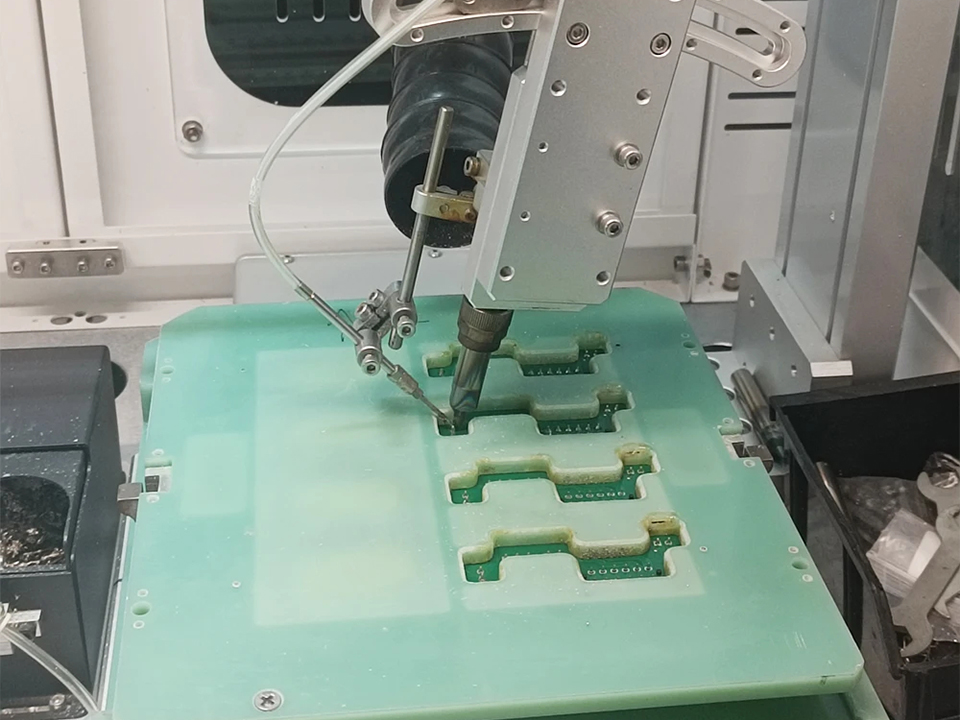
The Cost Contour: Where Quantity Really Conserves Cash
Manufacturing facilities do not rate quantity in a neat diagonal line. They rate in high cliffs.
At 10 boards, the expense per board is controlled by setup. At 100 boards, panel planning begins to matter. At 1,000 boards, acquiring and process repeatability start to reveal. At 10,000 boards, the discussion shifts again: return, delivery windows, credit rating terms, committed tooling, and whether the provider desires your company severely enough to reserve ability.
That last point matters.
Some factories price quote aggressively at medium volume to win lasting production. Others quote defensively because your layout looks hideous: odd dimensions, inadequate panelization, limited annular rings, unneeded ENIG, way too many component numbers, hidden vias, vague impedance notes, or a resistance stack that screams future argument.
The board talks. Manufacturing facilities listen.
A Practical PCB Volume Pricing Version
These numbers are not universal prices. They are a functioning model for exactly how PCB cost per board acts on a moderately basic FR-4 task, assuming no exotic RF laminate, no severe HDI, no Class 3 clinical documentation package, and no wild freight shock.
| Order Quantity | Regular Rates Behavior | Key Price Driver | What the Customer Normally Misses | Arrangement Angle |
|---|---|---|---|---|
| 5– 10 pcs | Really high price per board | CAM, arrangement, minimum cost | Model labor is almost dealt with | Ask for DFM notes, not just discount |
| 25– 100 pcs | Price decreases, but still rough | Setup spread + panel use | Panel waste can control | Change board rundown or range |
| 250– 500 pcs | Extra secure unit cost | Repeat procedure + inspection | Return presumptions start to matter | Ask how scrap is valued |
| 1,000– 5,000 computers | More powerful quantity prices | Material acquires + scheduling | Payment terms affect quote | Lock projection, not just PO |
| 10,000+ pcs | Cheapest system cost, higher direct exposure | Capability, yield, supply agreements | Provider might value threat into lead time | Bargain annual quantity agreement |
The table hides a nasty fact: a 500-piece order can sometimes price worse than a 1,000-piece order since it drops below a product purchasing break or leaves ugly waste on typical production panels.
That is not a typo.
An odd board dimension can make quantity less powerful than geometry. If your board wastes 38% of an 18 x 24 inch panel, your “quantity discount” is currently bleeding prior to the drill hits copper.
Copper, Laminate, and Why 2024 Made Buyers Nervous
PCB manufacturing expense is delicate to basic materials, specifically copper foil, copper-clad laminate, glass fiber, epoxy material systems, and specialized laminates such as Rogers, Taconic, Isola, Panasonic Megtron, and high-Tg FR-4.
Copper is not background noise. It is a price signal.
The World Bank stated in April 2024 that copper costs had actually surged to a two-year high and were anticipated to rise in 2024, while Reuters reported the refined copper market at 26.5 million statistics lots and pointed out supply-demand balances that still left purchasers viewing shortages and excess closely.
Below is my opinion: a lot of purchase divisions still treat PCB prices as if material cost were an explanation. That was constantly careless. In 2024, it became expensive.
A 1 oz copper layer is about 35 µm thick. Relocate to 2 oz copper and you do not just dual copper usage; you can alter etching behavior, line size tolerance, layering time, thermal stress and anxiety, and yield. Add hefty copper for power electronic devices, and your quote stops behaving like a product board.
For styles like OEM power supply PCB assembly with relays and transformer combination, copper weight, creepage distance, thermal alleviation, and present ability are not cosmetic line things. They are the work.
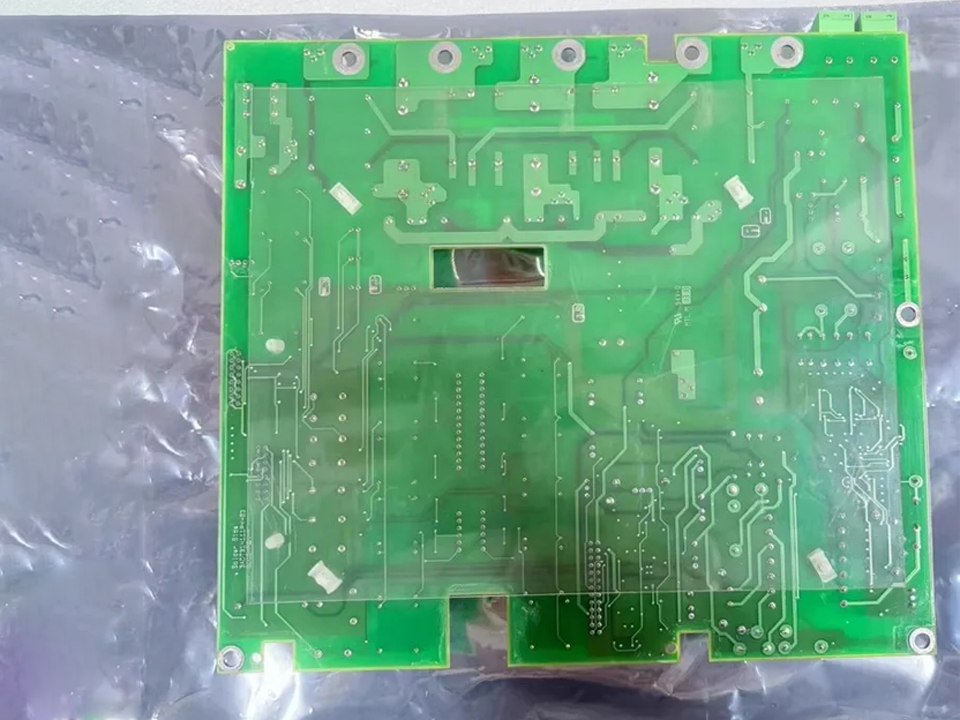
Low Volume PCB Production: The Catch Buyers Walk Into
Reduced quantity PCB manufacturing is costly since the factory has to recoup arrangement, design review, product preparation, procedure validation, examination, and scheduling initiative across a small number of boards, while still safeguarding itself versus scrap and rework.
Little runs are not the opponent. Vagueness is.
If you purchase 50 boards with insufficient great notes, unclear stack-up, no IPC class, undefined soldermask shade, loose resistance language, and a last-minute “can you make it faster?” email, the manufacturing facility rates your behavior into the quote.
I would certainly as well.
At low quantity, the provider has virtually no area to average out mistakes. One poor panel matters. One delayed laminate sheet issues. One unclear controlled-impedance requirement can turn a tidy job into a chain of e-mails, EQs, and angry calendar math.
So the genuine low-volume approach is not asking for a less costly PCB cost per board. It is minimizing unpredictability.
Send out clean Gerbers. Include IPC-356 netlist if offered. Define surface area finish: HASL lead-free, ENIG, immersion silver, OSP. Specify copper: 1 oz completed or beginning copper? Specify Tg: 135 ° C, 150 ° C, 170 ° C. Clarify tolerance: ± 0.10 mm or ± 0.20 mm. Give yearly projection, even if the first PO is little.
A manufacturing facility price cuts confidence.
High Volume PCB Production Price: Where the Manufacturing Facility Gets Serious
High quantity PCB production expense is driven less by setup and even more by yield, line speed, product contracts, quality documentation, product packaging, products, and the monetary danger of committing manufacturing capability to one customer.
When quantity climbs up, the supplier quits asking, “Can we build this?” and starts asking, “Can we build this repeatedly without shedding money?”
That is a different concern.
High-volume PCB pricing is where buried costs come out: AOI false telephone calls, soldermask registration drift, by means of connecting consistency, HASL density variant, ENIG nickel deterioration threat, impedance coupon screening, trace neck-downs, warpage, and packaging damages. A 2% scrap swing on 20 prototypes is annoying. A 2% scrap swing on 80,000 boards is a money conference.
For OEM multilayer control PCB setting up production, the board is only one cost layer. Assembly yield, relay sourcing, LCD interface security, conformal finish, in-circuit screening, firmware loading, and final QA can conveniently control the landed system cost.
This is where inexpensive quotes obtain harmful. Not always. Yet commonly sufficient.
Panel Utilization: The Peaceful Killer of PCB Price Per Board
Panel usage is the percentage of a production panel that becomes salable circuit card after routing, rails, tooling openings, discount coupons, spacing, and scrap zones are eliminated.
That sentence must be taped to every equipment customer’s screen.
A board that looks tiny in CAD might still be costly if it nests terribly. A strange shape, uneven cutout, antenna keep-out, long slim outline, or extreme side clearance can ravage panel return. You might buy 1,000 boards, however the factory may need sufficient laminate for what seems like 1,350 boards due to the fact that your geometry is inefficient.
Desire a blunt trick?
Ask the manufacturer to show the recommended panel drawing before mass production. Not after. Before.
For thick or intricate job like HDI high-frequency PCB setting up and one-stop OEM solution, panelization is not just a price concern; it affects insusceptibility consistency, via dependability, registration, and dealing with damages.
Surface Finish, Layer Count, and the False Economy of “Low-cost”
Surface area coating affects PCB rates since it changes chemistry, shelf life, solderability, assessment problem, and threat account.
HASL is inexpensive, however not always excellent. ENIG expenses a lot more, yet supports flat pads, fine-pitch parts, BGA assembly, and much longer shelf life. OSP is economical, yet taking care of and storage space discipline issue. Immersion silver has its own taint worries.
Layer count functions the same way. A 2-layer board is not half of a 4-layer board. A 6-layer board is not simply a 4-layer board plus two. Each included layer changes lamination, boring, registration, testing, and return threat.
I have a prejudice right here: when the item has real duty-cycle stress and anxiety, clinical tracking, automotive-style resonance, or thermal loading, pressing the board quote too hard can be careless.
For example, an OEM Bluetooth ECG sensor PCB producer for wearables has to believe past bare-board price. Wearables bring battery safety and security, antenna performance, body-adjacent integrity, miniaturization, and setting up uniformity into the cost equation.
The least expensive PCB is in some cases the most costly part of the product.
The Distributor’s Hidden Computation: Risk Premium
Every PCB quote includes a danger premium, even when nobody names it.
The manufacturing facility looks at your documents and asks personal questions. Are the Gerbers clean? Is the stack-up sane? Is the purchaser experienced? Will this work repeat? Are there managed resistance needs? Is Course 3 indicated but not stated? Are there blind vias? Is the delivery date fantasy? Will the consumer argue over aesthetic soldermask shade?
After that the quote shows up.
Magic? No. Judgment.
IPC’s November 2024 information showed North American PCB deliveries up 4.7% year over year, reservations up 29.1%, and the book-to-bill ratio at 1.15, with IPC’s economic expert noting the ratio had actually reached its highest degree in more than 2 years. When reservations outrun shipments, factories end up being selective; they estimate risk with less apology.
That is why 2 purchasers can send out “similar” boards and get really various PCB prices.
One customer sends out regulated data, annual projection, realistic lead time, and clean notes. The other sends out confusion. Guess who obtains the far better cost?
Exactly How to Lower PCB Price Without Damaging Top Quality
The best method to minimize PCB rates is not to demand a discount rate; it is to get rid of waste from the design, the documents, the buying pattern, and the manufacturing strategy.
Below is the unpopular list:
Use standard FR-4 unless the signal, temperature level, or compliance need verifies or else. Avoid unneeded ENIG. Reduce layer count just if signal integrity and EMI permit it. Boost panel utilization. Systematize board thickness: 1.6 mm, 1.2 mm, or 0.8 mm where possible. Stay clear of little vias unless needed. Maintain trace/space manufacturable: 6/6 mil is less expensive than pushing 3/3 mil. Combine revisions. Supply projection. Quit changing files after quote.
And please, quit asking factories for “finest rate” without annual quantity, no target top quality class, and no lead-time adaptability.
That is not sourcing. That is wagering with e-mail.
FAQ
Just how does order volume impact PCB cost?
Order volume impacts PCB cost by spreading repaired manufacturing expenditures across even more units while enhancing material acquiring, panel efficiency, scheduling predictability, and procedure repeatability, which generally decreases the price per board as amount increases, although the decrease takes place in prices steps instead of a perfectly smooth contour.
The configuration problem is the huge reason. Web cam review, tooling, pierce programs, AOI configuration, electrical testing prep work, and manufacturing paperwork might be almost the very same for 10 boards and 500 boards. Volume just assists when those fixed prices obtain separated across sufficient boards to matter.
Why is PCB prototype cost so high?
PCB model expense is high due to the fact that a little order still calls for engineering evaluation, manufacturing setup, tooling preparation, material handling, evaluation, screening, and scheduling, yet those expenses are separated across just a couple of boards rather than hundreds or countless systems.
A model is likewise riskier for the factory. New designs often have insufficient notes, unclear resistances, untested stack-ups, or unclear setting up presumptions. The factory rates in that uncertainty, particularly when the order has no verified manufacturing follow-up.
What is the most significant factor in PCB manufacturing price?
The most significant consider PCB manufacturing price is usually the communication in between layout complexity and production quantity, due to the fact that layer count, copper weight, using framework, surface area coating, tolerance, material type, and inspection requirements identify just how much factory effort need to be spread throughout the order quantity.
An easy 2-layer FR-4 board at 5,000 items can be low-cost. A low-volume 10-layer HDI board with blind vias, ENIG, 0.10 mm trace/space, insusceptibility coupons, and IPC Class 3 examination will certainly not act like an asset acquisition.
Is high volume PCB manufacturing always cheaper?
High volume PCB production is normally more affordable per board, yet it is not immediately less costly in complete program cost since yield loss, product dedications, top quality paperwork, supply holding, engineering adjustments, and logistics exposure end up being much more expensive when scaled.
A negative modification at 50 boards is a lesson. A bad alteration at 50,000 boards is a write-off. Before chasing after high-volume prices, secure the layout, validate assembly, validate examination insurance coverage, and discuss just how future modifications will be handled.
Just how can customers get better PCB volume rates?
Purchasers can improve PCB quantity pricing by offering distributors tidy construction data, realistic annual forecasts, secure revisions, adaptable distribution home windows, chosen material options, clear quality requirements, and sufficient order visibility for the factory to strategy purchasing and production capability efficiently.
The worst method is requesting an affordable price while concealing need. If you anticipate 20,000 boards over six months, state so. Suppliers price uncertainty. Provide trustworthy quantity, and the quote normally ends up being less defensive.
Stop Buying Boards Like Office Supplies
PCB rates is not a commodity sticker. It is a manufacturing danger model using an unit rate outfit.
If you want lower PCB price per board, do not begin by shouting about volume. Begin by cleaning up the style, tightening the documentation, improving panel usage, selecting rational products, and giving the supplier a credible manufacturing path.
We can discuss discount rates after that.
For OEM teams comparing model builds, low volume PCB production, or high volume PCB production price, begin with a supplier that can estimate the board and the assembly truth with each other. Review personalized PCB circuit card and PCB assembly OEM factory support prior to dealing with the lowest bare-board quote as the winner.
