


Buyer Guides
Flex PCB vs Rigid Board with Stiffeners: Cost Analysis

May
Affordable boards exist.
That is the first thing I would inform any type of customer comparing a flex PCB with support versus a stiff FR-4 board, because the lowest line product on the manufacture quote frequently hides the bigger expense in adapters, unit quantity, hand-operated setting up, scrap, field failures, and redesign time. So what are you really acquiring: copper and polyimide, or mechanical liberty?
I’m going to be blunt. The majority of “flex PCB expense” conversations are created like brochure copy. Smooth, unclear, useless. The genuine decision is uglier: a flex PCB with stiffener might set you back more at the board degree, but a rigid board may require you into cords, mezzanine ports, screws, brackets, thicker housings, and an assembly process that consumes margin one touch at once.
And yes, supports matter. A whole lot.
Look Intent: Why Customers Ask This Question
The search intent behind “Flex PCB vs Rigid Board with Stiffeners: Expense Analysis” is mainly commercial investigation, not informal education and learning. The visitor is probably an engineer, purchase lead, item owner, or contract producer contrasting style paths before securing a BOM.
They are not asking, “What is a flex PCB?” They are asking, “Which selection will punish me much less when I move from prototype to 10,000 units?”
That means the answer has to consist of versatile PCB prices, PCB support expense, rigid-flex PCB expense contrast, lead-time risk, assembly return, and sourcing direct exposure. In other words: the genuine costs.
The First Hard Reality: Flex PCB Price Is Not Simply Board Cost
Flex PCB Price is the combined expense of polyimide product, copper type, coverlay handling, boring, plating, stiffener bonding, dimensional tolerance control, panel utilization, assessment, and assembly handling. It usually looks costly next to FR-4, however it can lower complete system cost when it eliminates adapters, cable televisions, fasteners, or enclosure complexity.
An inflexible board is generally cheaper per square inch. Not a surprise there.
Yet the second you add movement, folding, weight reduction, or Z-axis product packaging pressure, the rigid board begins requesting helpers: bow cables, board-to-board ports, plastic overviews, screws, molded clips, adhesive foam, labor actions. Those assistants are where tidy spreadsheet reasoning mosts likely to die.
For early prototypes that mix flex directing with an installed control area, I would certainly standard against a construct design comparable to an OEM PCB prototype with flex circuit and control panel before acting an ordinary FR-4 quote informs the entire tale.
What a Stiffener Really Does to the Cost
A stiffener is not ornamental backing. It is a mechanical treatment.
In a flex PCB with support, you normally add FR-4, polyimide, stainless steel, or light weight aluminum under picked areas: ZIF port fingers, firm component areas, screw-mount locations, keypad zones, battery contacts, or pressure-sensitive areas. That adds product, adhesive, lamination, enrollment, trimming, evaluation, and often hand-operated handling.
Tiny part. Big nuisance.
The price effect depends much less on the support’s basic material and more on exactly how uncomfortable it is to position, bond, treatment, and inspect. FR-4 stiffeners prevail and cost-effective. Polyimide supports are thinner and cleaner for bend-adjacent zones. Stainless-steel supports elevate mechanical stability, but they likewise increase construction technique. Light weight aluminum can assist with warmth spreading, however it makes complex monotony and bonding expectations.
Here is the component suppliers frequently downplay: a poor stiffener style can turn an inexpensive flex right into a return issue. Misalignment at a 0.5 mm pitch ZIF tail is not a minor cosmetic issue. It is a decline pile.
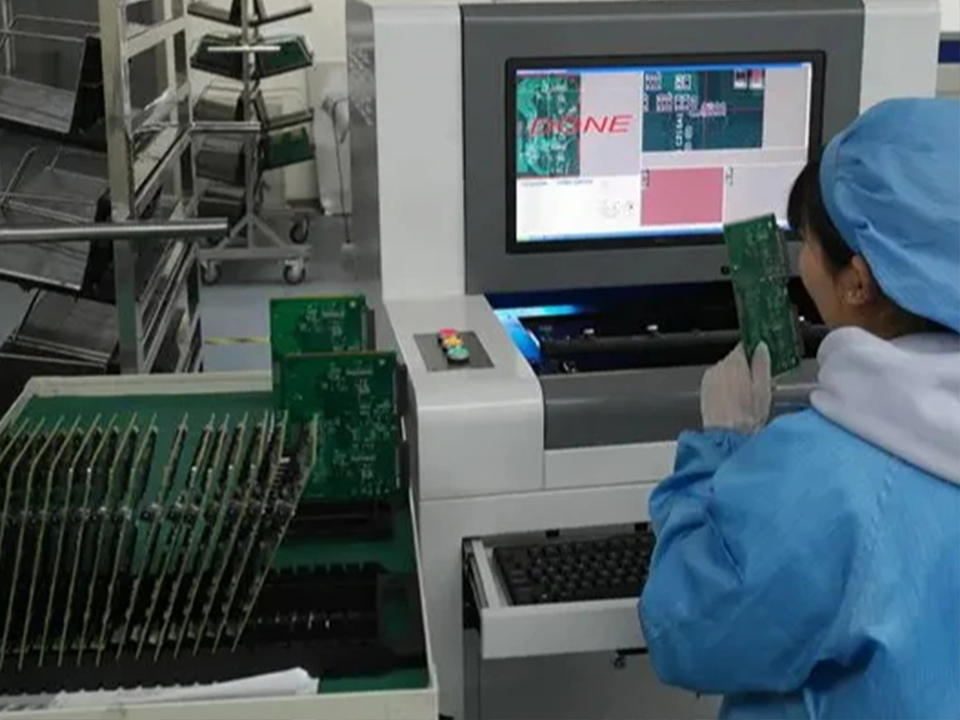
Flex PCB vs Stiff PCB: The Expense Heap
| Price Factor | Flex PCB with Stiffener | Rigid FR-4 Board with Mechanical Support | My Take |
|---|---|---|---|
| Base product | Greater: polyimide, coverlay, versatile copper | Lower: FR-4, standard solder mask | Rigid wins on raw laminate |
| Tooling/NRE | Medium to high, especially for support and coverlay openings | Reduced to tool | Inflexible success at prototype stage |
| Panel usage | Often even worse since shape is uneven | Generally far better | Inflexible victories unless flex is created for panel effectiveness |
| Assembly handling | May need carrier tooling | Usually much easier | Inflexible success unless flex removes later setting up actions |
| Connector/cable count | Typically lower | Usually greater | Flex wins when it changes harnesses |
| Mechanical product packaging | Outstanding for folded up, curved, compact items | Poor unless unit takes in intricacy | Flex wins in tight products |
| Field integrity | Strong if bend span and stress alleviation are designed properly | Strong if adapters and cables are managed | Depends on activity, not ideology |
| Ideal use instance | Portable devices, moving parts, LED strips, clinical wearables, phone components | Static boards, low-priced controllers, power boards, commercial panels | Make use of the style that lowers total touches |
The Figures Nobody Wants to Place In the Quote
Allow’s chat directional rates. Not fantasy rates. Not distributor bait.
For straightforward 2-layer inflexible FR-4 prototypes, purchasers might see extremely reduced board-only rates due to the fact that the supply chain is completely enhanced. A similar 2-layer flex PCB with coverlay and one FR-4 support can set you back a number of times extra at tiny amount, specifically when the synopsis is irregular or connector fingers require tight density control.
At production quantity, the ratio compresses, however it rarely vanishes. A flex circuit still brings higher product and procedure overhead. A rigidized flex circuit adds an additional cost layer since stiffeners introduce mechanical accuracy needs.
But the smarter concern is not “just how much does a flex PCB with stiffeners set you back?” The smarter inquiry is: “What price vanishes if the flex exists?”
If the flex PCB removes 2 ports, one FFC cable television, 4 screws, a plastic overview, and 35 secs of hands-on assembly, the higher PCB rate may be the cheaper organization choice.
I have actually seen groups obsess over a $0.42 PCB delta while ignoring a $1.15 connector-and-labor fine. That is not cost design. That is quote prayer.
Market Stress: Why 2024 Prices Really Felt Unsteady
PCB rates in 2024 was not moving in a vacuum cleaner. IPC reported that North American PCB shipments in September 2024 were down 24.1% year over year, while bookings were down 4.4% and the book-to-bill ratio stood at 1.08; that mix signals weak shipment circulation with orders still slightly ahead of billed sales.
Then the tone altered. IPC’s November 2024 record revealed North American PCB shipments up 4.7% year over year, reservations up 29.1%, and a book-to-bill proportion of 1.15, the highest degree in greater than two years according to IPC’s chief economist.
That whipsaw matters.
A purchaser quoting flex PCB vs rigid PCB in September and re-quoting in December might see various manufacturing facility behavior: extra hostile lead-time protection, much less resistance for messy illustrations, and faster price acceleration on intricate builds. Flex suffers initially because environment because it uses more specialized procedure steps.
Profession regulations added an additional layer. On Might 24, 2024, the U.S. Profession Representative prolonged particular China Section 301 toll exemptions with May 31, 2025, and the main exclusion checklist specifically referenced non-flexible 2-layer and 4-layer printed circuit card under HTSUS 8534.00.0040 and 8534.00.0020.
Notification the phrasing: not versatile.
That detail matters for landed price. A stiff FR-4 board might sit inside a toll exemption path that a flex develop does not. Purchase groups that disregard HTS category are not conserving cash; they are delaying the disagreement till customizeds or bookkeeping discovers it.
Where Inflexible Boards Still Beat Flex
Inflexible boards win when the item is static, spacious, cost-sensitive, thermally straightforward, and simple to assemble without additional harness disorder.
A thermostat control panel? Inflexible possibly wins.
A power board with screw terminals, relays, transformers, and high existing copper? Inflexible victories the majority of the time. If your application resembles a DC power control PCB with LED screen, the price reasoning generally favors FR-4 unless the enclosure demands folding or the screen component need to float away from the main board.
A controller making use of common connectors, MCU circuitry, and no duplicated flexing may also belong in inflexible area. For instance, a product style closer to an MCU control PCB board for long-range control need to not be pushed into flex just because flex noises premium.
Flex is not magic. It is costly mechanical authorization.
Where Flex PCB with Stiffener Wins
Flex wins when the board is likewise the interconnect, the mechanical joint, the weight reducer, or the packaging technique that makes the product possible.
Think phone components, cam settings up, portable clinical sensors, LED wearables, folding user interfaces, relocating robotics joints, battery tabs, little screens, and high-density customer tools. In these instances, the flex is not changing an inflexible PCB. It is changing an electrical wiring approach.
A flex PCB with stiffener ends up being specifically eye-catching when one section needs port strength while one more area need to flex. That is the classic ZIF tail trouble: the contact area requires controlled density, while the rest of the circuit needs activity.
For LED items, the same debate turns up in a different way. A pure inflexible LED PCB may be inexpensive, however if the lighting path contours around a housing, the setting up labor can get unpleasant. That is where contrasting versus a customized RGB LED PCB board setting up makes even more sense than contrasting against a naked FR-4 discount coupon.
The Rigid-Flex Trap
Rigid-flex is where budgets go to be evaluated.
A rigid-flex PCB can be classy: fewer connectors, better signal connection, cleaner assembly, more powerful product packaging, less failing factors. It can additionally be excessive used by engineers that want a stunning board and have not yet talked with manufacturing.
Rigid-flex PCB price comparison need to include layer count changes, sequential lamination, insusceptibility control, through technique, coverlay clearance, bend radius, copper grain direction, and test accessibility. The price jump from flex to rigid-flex is not a rounding error. It is a procedure dive.
My point of view: use rigid-flex just when it removes enough interconnect threat to validate the premium. If a simple flex tail plus inflexible PCB gets the job done, do not buy a monolith.
For larger interface boards with USB, Ethernet, or multi-port I/O, a standard multilayer FR-4 platform like an OEM wholesale multilayer PCB panel with USB and Ethernet ports may be more financially rational than routing whatever through rigid-flex.
Cost Drivers Purchasers Must Obstacle Prior To Paying
Inquire about copper type. Rolled annealed copper expenses more than electrodeposited copper however behaves much better in vibrant flexing. If your flex bends when throughout assembly, ED copper may serve. If it bends repeatedly, cheap copper comes to be a failing plan.
Ask about bend radius. A limited bend near layered vias is not take on design. It is proof damage.
Inquire about support material and thickness. Adapter areas usually require completed thickness control, not just “add FR-4 there.” A 0.3 mm stiffener and a 0.8 mm support are not the exact same manufacturing issue.
Ask about sticky. Pressure-sensitive adhesive can be hassle-free, but thermoset adhesive may be much better for warm, stress and anxiety, and long-term stability.
Inquire about panel utilization. Odd flex details waste material. Your vendor may not claim “your shape is dumb,” but the quote will.
Inquire about assembly service providers. Flex circuits flop. Machines hate saggy points. If SMT components sit on the flex location, service provider tooling can enter into the genuine cost.
The Customer’s Decision Matrix
| Scenario | Better Option | Factor |
|---|---|---|
| Fixed control board in spacious room | Inflexible FR-4 | Least expensive board expense, easy setting up, fully grown supply chain |
| Folded up product with display, sensing unit, or keypad counter | Flex PCB with support | Minimizes wires, adapters, enclosure bulk |
| Repeated bending or motion | Flex PCB with proper copper and bend style | Inflexible plus wire may fall short mechanically |
| High-current power control | Inflexible board | Better copper weight, warmth dispersing, port anchoring |
| Phone, cam, wearable, small module | Flex or rigid-flex | Product packaging density drives the choice |
| Low-volume model with no mechanical pressure | Stiff board | Flex NRE might not pay back |
| Product with numerous board sections and high integrity need | Rigid-flex PCB | Can decrease port failure and assembly variability |
| Cost-sensitive LED board with simple level geometry | Stiff PCB | Flex is unnecessary unless geometry forces it |
My Working Policy for Flex PCB Expense
If flex only makes the board prettier, deny it.
If flex eliminates parts, labor, density, adapters, guarantee danger, or setting up obscurity, price it seriously.
That is the policy. It is not enchanting. It functions.
An inflexible board with supports, brackets, jumpers, or cable televisions can be less expensive at 100 devices and more expensive at 100,000 systems. A flex PCB with stiffener can look costly in purchase and still save the product architecture. The only sincere contrast is complete installed expense: PCB construction, assembly, connectors, hardware, housing, labor, examination, scrap, revamp, shipping weight, and area failing exposure.
FAQ
What is Flex PCB Expense?
Flex PCB Cost is the complete manufacturing and combination expense of a flexible published circuit, consisting of polyimide laminate, copper, coverlay, exploration, plating, stiffener bonding, evaluation, setting up tooling, and return threat, not just the bare board rate shown on a vendor quote.
The mistake is contrasting flex and stiff boards by square inch. Flex circuits are commonly acquired to fix mechanical and setting up troubles. If an adaptable PCB rates quote is $0.80 greater but removes two adapters and one cable, the board-only contrast comes to be misleading.
How much does a flex PCB with supports cost?
A flex PCB with supports sets you back greater than a plain rigid PCB due to the fact that it combines adaptable circuit fabrication with added mechanical reinforcement, sticky bonding, enrollment control, and assessment actions around connector, element, or placing areas.
The array depends upon layer matter, stiffener product, quantity, surface area coating, resistance, bend needs, and whether SMT setting up sits on the flex location. FR-4 supports are usually the budget option. Stainless-steel and light weight aluminum stiffeners increase mechanical performance yet also boost process sensitivity.
Is a stiff PCB less costly than a flex PCB?
A rigid PCB is typically less costly than a flex PCB at the bare-board degree because FR-4 product, solder mask, boring, routing, and panelization are extremely standard throughout worldwide factories.
But bare-board rate is not complete item expense. An inflexible board may need adapters, wires, screws, braces, larger real estates, or a lot more hand-operated assembly. If those extras vanish with a flex PCB, the greater flex PCB cost can be readily rational.
When should I select a rigidized flex circuit?
A rigidized flex circuit must be selected when one area must bend or fold while another section needs mechanical stability for ports, solder joints, installing pressure, or part assistance.
This prevails around ZIF adapters, electronic camera modules, displays, sensing units, battery tabs, and small user-interface settings up. The stiffener ought to sustain the stress area without going across right into the bend location. Bad support placement can create cracking specifically where the design requires survival.
Is rigid-flex PCB less costly than flex plus inflexible board?
Rigid-flex PCB is normally not less costly at the fabrication degree, but it can become less costly at the system degree if it gets rid of ports, wires, hand setting up, revamp, and interconnect failure factors.
The choice depends on quantity and dependability targets. For low-volume builds, different stiff and flex boards typically win. For dense products with duplicated assembly risk or serious area limitations, rigid-flex can justify its costs.
What is the largest hidden PCB stiffener cost?
The biggest covert PCB stiffener cost is not the support product itself; it is the included procedure control needed for bonding precision, density targets, adhesive behavior, healing, trimming, examination, and downstream setting up positioning.
A stiffener under a connector tail can make or damage mating dependability. If the ended up density is incorrect, the adapter may not secure properly. If the support changes, the board might pass visual testimonial and still fall short during assembly.
Conclusion
Before choosing flex PCB, stiff PCB, or rigid-flex, price the entire product as opposed to worshipping the board quote. Send out the supplier a real stack-up target, bend radius, stiffener illustration, connector version, quantity bands, surface area finish, setting up notes, and test demands. After that request 2 quotes: one bare-board quote and one overall setting up quote.
That is where the reality turns up.
