


Compliance
When PCB Buyers Should Require IPC Class 2 vs Class 3 Standards
Mar
Most buyers guess. In PCB sourcing, that guess usually hides inside one lazy purchase-order line—“Build to Class 3”—which feels smart right up to the moment quote prices jump, yield risk rises, and the board in question turns out to be a perfectly ordinary control board that never belonged in a high-reliability category at all. And who pays for that guess?
I’ll say the part many sales teams avoid: IPC Class 2 vs Class 3 is not a prestige ladder. It is a consequence ladder. IPC’s own generic performance spec says the buyer, not the fabricator, has to specify the required class in the contract or purchase order, and IPC separates those classes by increasing functional demands and inspection frequency. Class 2 covers dedicated-service electronics where extended life matters and uninterrupted service is wanted but not mission-fatal; Class 3 is for products where continued performance is demanded and downtime cannot be tolerated, including life-support or flight-control type use cases.
Table of Contents
IPC Class 2 vs Class 3 starts with consequence, not ego
Here is the hard truth. I’ve watched buyers use Class 3 as a legal blanket, an internal-politics shield, or a shortcut for not doing a real failure-mode discussion, and that habit is expensive because the wrong class does not fix weak stackups, bad hole design, sloppy supplier control, or a vague RFQ.
For mainstream electronics, IPC Class 2 PCB requirements are often the right commercial answer. If you are buying FR-4 control PCB manufacturing for smart display panels or multilayer HDI PCB fabrication for fine-pitch designs, and the end product is a commercial controller, HMI, communications module, or business instrument, Class 2 usually fits the actual risk profile better than a reflexive Class 3 call. That is almost exactly where IPC places Class 2: communications equipment, sophisticated business machines, and instruments that need performance and long life, but not zero-tolerance downtime.
But when the board sits inside a device that must work on demand—think therapy delivery, flight electronics, or hardware where failure drags safety exposure, regulatory action, or catastrophic downtime behind it—IPC Class 3 PCB requirements stop being optional theater and start becoming minimum hygiene. NASA’s workmanship guidance goes further than generic marketing talk: high-reliability developers qualify suppliers against Class 3 standards such as IPC-A-600, IPC-6011, IPC-6012, IPC-6013, and, for space and military avionics, the IPC-6012 addendum for those harsher applications.
What Class 2 really buys you, and why that is often enough
Not everything important is Class 3. That sounds obvious, yet buyers miss it every week.
A Class 2 board is usually the right answer when the product needs strong field life, consistent electrical performance, and reasonable abuse tolerance, but a single board failure is not likely to become a patient event, a flight event, or a reportable safety event. That includes a lot of industrial controls, display electronics, commercial networking gear, and plenty of OEM subsystems built on FR-4, polyimide, or even denser HDI constructions. IPC explicitly describes Class 2 as dedicated-service electronics where high performance and extended life matter, while some cosmetic imperfections are still allowed.
I’d put many custom flexible PCB builds for OEM devices in that bucket too—especially when the flex is serving packaging convenience, not safety-critical performance. Same with many rigid-flex PCB builds for foldable circuits used in premium commercial hardware: expensive, yes; difficult, yes; automatically Class 3, no. Complexity is not the same thing as consequence.
When buyers should require IPC Class 3, without hedging
This part is simpler than people pretend. If failure means a missed safety function, a patient hazard, loss of mission capability, or the sort of downtime your customer cannot legally or operationally absorb, you require Class 3 and you write it clearly.
IPC’s language is blunt: Class 3 is for high-reliability products where continued performance is required, downtime is not tolerated, and service is essential. NASA’s supplier-qualification view lines up with that and points buyers toward Class 3-based standards and, in space-grade work, additional appendices and addenda rather than a casual “build it better” instruction. So if your PCB sits in life support, flight control, high-consequence power electronics, or regulated hardware where “mostly works” is a career-ending phrase, you are already in Class 3 territory.
And no, “automotive” by itself is not enough. I’ve seen buyers stamp Class 3 onto anything with wheels, including boards that control nothing more than light patterns or cabin convenience features. That is lazy procurement. A board inside aluminum MCPCB panels for automotive LED lighting might stay in a Class 2 mindset if the function is non-safety, but once you cross into braking, ESC, ADAS, or powertrain-critical control, the discipline changes fast because the consequence changes fast.
| End product or use case | Failure consequence | My recommendation | Why |
|---|---|---|---|
| Commercial display controller, smart panel FR-4 board | Annoying outage, service call, replacement | Class 2 | Performance matters, but downtime is usually tolerable |
| Fine-pitch HDI board in commercial electronics | Warranty cost, brand damage, not a life-safety event | Class 2 | Dense design does not automatically justify Class 3 |
| Industrial instrument or communications module | Lost uptime, business disruption | Usually Class 2, with added test controls if needed | Dedicated-service profile fits IPC Class 2 well |
| Flexible or rigid-flex board in regulated therapy hardware | Possible patient or functional hazard | Class 3 | Repeated mechanical stress plus consequence raises the bar |
| Flight electronics, space hardware, mission avionics | Mission loss or severe safety exposure | Class 3 plus tighter addenda/specs | NASA points to Class 3-based standards and space/military addenda |
| Safety-critical vehicle control board | Crash risk, legal exposure, recall risk | Class 3 mindset or tighter custom requirement set | Failure consequence is far beyond ordinary electronics |
That table is my buyer’s version of IPC-6012 Class 2 vs Class 3. The baseline class definitions come from IPC and NASA; the recommendations reflect the very boring, very expensive way regulated sectors punish failure.
The 2024 cases that expose lazy specification
Three cases. Three warnings.
First, aerospace. After the January 5, 2024 Alaska Airlines 737 MAX 9 mid-air incident, the FAA’s production audit found multiple instances where Boeing and Spirit AeroSystems allegedly failed to comply with manufacturing quality-control requirements, including process control, parts handling and storage, and product control. No, that was not a PCB article. Yes, it matters here, because in high-consequence sectors regulators do not care how premium your brochure sounds; they care whether process discipline was real.
Second, medical devices. In August 2024, the FDA said Abiomed had to remove certain Impella CP with SmartAssist devices after nine pumps in a single lot failed inspection and were inadvertently released to customers. The FDA labeled it the most serious recall type. That is the buyer lesson in one sentence: inspection escapes inside high-risk hardware do not stay “small” for long.
Third, automotive safety electronics. In September 2024, NHTSA’s recall report said 1,227,808 Ram 1500 vehicles could have an ABS control module software malfunction that disabled Electronic Stability Control, with crash risk explicitly stated in the filing. Again, not a bare-board IPC story. But if a PCB buyer is sourcing a board that lives inside a safety chain like ABS or ESC, pretending that ordinary Class 2 procurement language is enough is wishful thinking dressed up as cost control.
So what do I take from those cases? This: when the system consequence is ugly, buyers should stop arguing about pennies and start arguing about assurance.
What I would actually write into the RFQ
If you only write “Class 3 required,” you are not buying reliability. You are buying ambiguity.
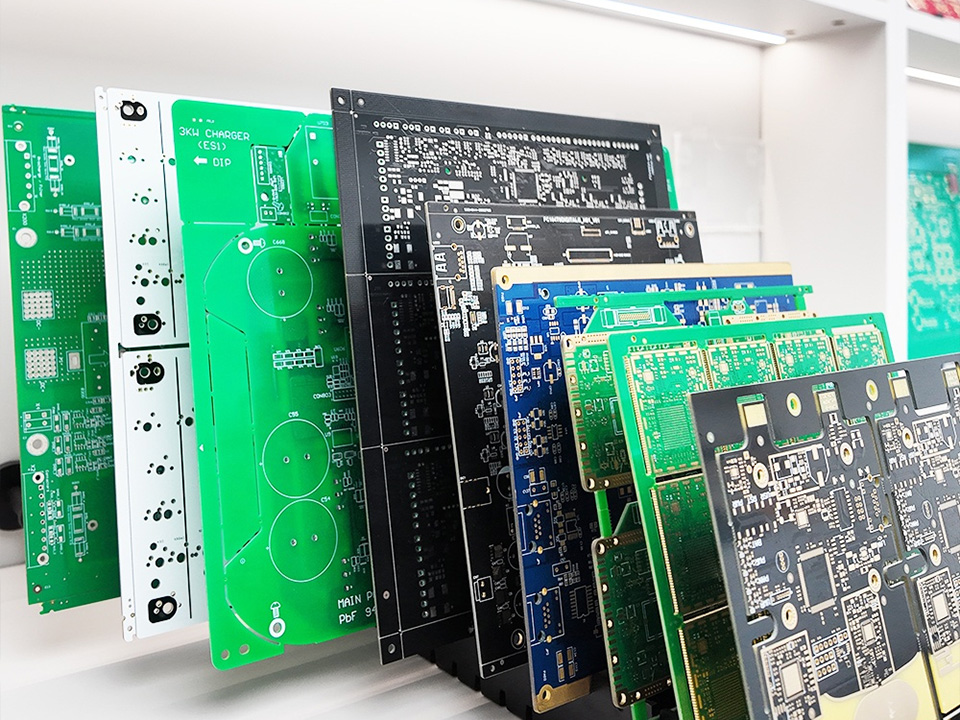
A serious RFQ should state the required IPC class, the governing performance spec such as IPC-6012 for rigid boards or IPC-6013 for flex, the material system if it matters—FR-4, polyimide, PTFE—the layer count, copper weight, via structure, microsection or coupon expectations, test and traceability requirements, and the approval path for any deviation. IPC says the user is responsible for specifying the performance class in the purchase order, and NASA’s workmanship guidance shows how high-reliability buyers layer that class call with supplier qualification and extra assurance expectations rather than trusting a single label.
I would also separate “needs Class 3” from “needs Class 3 plus extra controls.” Space and military avionics buyers already know this. Plain Class 3 may not be enough when the environment includes vibration, thermal cycling, long mission duration, and near-zero tolerance for latent defects. That is why NASA points to the IPC-6012 space and military avionics addendum, not just the generic class label.
FAQs
What is the real difference between IPC Class 2 and Class 3?
IPC Class 2 covers dedicated-service electronics that need good performance and long life, while IPC Class 3 applies to high-reliability electronics where continued performance is required, downtime cannot be tolerated, and buyers need stricter assurance through higher inspection and testing expectations than Class 2. That is the clean version. The messier version is commercial: Class 3 usually costs more because you are asking the supply chain to prove more, document more, and miss less.
When should buyers require IPC Class 3?
Buyers should require IPC Class 3 when PCB failure could create a patient hazard, a flight or mission problem, a safety-function loss, or a level of downtime that the end market cannot legally, operationally, or commercially absorb, especially in medical, aerospace, defense, and other high-consequence electronics. I would add one more filter: if your customer would launch a recall, a CAPA, or a regulator notification after failure, stop pretending Class 2 is a brave option.
Does automotive always require Class 3?
Automotive does not automatically require IPC Class 3 because the right class depends on the board’s exact function, the consequence of failure, and the regulatory chain around that function, not on the word “automotive” alone. A cabin display board is not an ESC control path. The 2024 Ram recall is a good reminder that once electronics touch braking or stability control, the safety and liability picture changes immediately.
Is writing “build to Class 3” enough on a purchase order?
Writing “build to Class 3” is not enough because IPC places responsibility on the buyer to specify the required performance class and, in practice, high-reliability procurement also needs the correct governing specification, material stack, test expectations, traceability rules, and deviation controls. In plain English, the PO has to describe what “high reliability” means in your program, not in the supplier’s imagination.
If you are sourcing HDI, FR-4 control boards, flex, rigid-flex, or aluminum-base PCBs and want the spec reviewed through a buyer’s lens instead of a salesperson’s lens, start with the actual failure consequence, then match the board class to that consequence, not to fear. That is how smart PCB buyers choose between Class 2 and Class 3.
