


Buyer Guides
Multi-Manufacturer PCB Quoting: Correct Negotiation Strategy
Jun
Price hides risk.
That is the ugly truth most buyers learn only after the first “cheap” PCB order arrives with wrong copper weight, uncontrolled impedance, missing testing notes, delayed shipment, or a polite factory email saying the original quotation did not include one small detail that somehow changes the whole project cost. So what exactly are we comparing when we compare PCB quotes?
I do not treat a PCB quote comparison as a spreadsheet exercise. I treat it like an investigation. The suspect is not always the supplier. Sometimes the suspect is the buyer’s own RFQ package: incomplete Gerber files, vague stack-up, no IPC class, no controlled impedance note, no finished copper thickness, no delivery split, no packaging requirement, no test method, no real forecast.
And then the buyer asks five factories for prices and wonders why the gap is 18%, 35%, even 60%.
Of course it is messy. One supplier quotes standard FR-4 Tg150. Another assumes Tg170. One includes ENIG. Another uses lead-free HASL. One prices 100% electrical test. Another keeps test wording vague. One reads “2 oz copper” as base copper. Another reads it as finished copper. Same PCB? Not really.
Why Multi-Manufacturer PCB Quoting Is Often Misread
The lazy version of multi-manufacturer PCB quoting is simple: send the same email to five suppliers and pick the lowest number.
I hate that method.
It works for buying office chairs, maybe. It does not work well for 6-layer industrial control PCB, 0.15 mm trace/space, BGA pads, ENIG surface finish, Tg170 laminate, 50Ω ±10% impedance, 1.6 mm board thickness, and a 12-working-day production window.
A real PCB quote comparison has to normalize the quote before judging it. The buyer has to ask: Are all suppliers pricing the same technical object, the same quality level, the same delivery condition, and the same commercial risk?
The 2025 Industry article on component price negotiation in PCB design gives one useful procurement habit: request several supplier quotes, clarify lead time, and use the RFQ response as the starting point for negotiation. I agree with the framework, but I would add one hard correction: multiple quotes only help when the input data is controlled. Bad RFQ in, bad comparison out.
And yes, suppliers know when you are only fishing.
A supplier that receives a vague RFQ with no target quantity, no annual forecast, no application context, and no order timeline will usually protect itself. That means padding risk into the price. Sometimes 5%. Sometimes 15%. Sometimes more.
The Quote Is Not the Price
Here is where buyers get trapped: the quoted unit price is the most visible number, but it is not always the economic number.
A $1.42 PCB can be more expensive than a $1.58 PCB if the lower quote excludes tooling, impedance coupon, UL marking, test report, vacuum packaging, or export documentation. A fast-turn prototype can look cheap until the supplier adds engineering review fees, special material surcharges, or DHL freight after the buyer has already committed.
I have seen buyers argue over $0.06 per PCB while ignoring a $280 tooling fee, a 4-day delay, or a 3% yield risk caused by unrealistic hole-to-copper clearance. That is not negotiation. That is theater.
For multilayer projects, the buyer should compare:
- Material brand and Tg value
- Layer count and stack-up
- Finished copper thickness
- Minimum trace/space
- Minimum drill and via type
- Surface finish
- Solder mask and silkscreen requirements
- Impedance control and tolerance
- Testing method
- Lead time and shipment term
- Tooling, film, fixture, EQ, and NRE fees
- Revision control and DFM response time
The technical part matters. If your RFQ contains Gerber, BOM, stack-up, impedance requirements, and panel drawing, you are negotiating from evidence. If it only contains “please quote attached PCB,” you are negotiating from fog.
For buyers who want a cleaner manufacturing review before comparing suppliers, a quote built around Gerber DFM service for multilayer PCB manufacturing is usually more useful than a blind price race.
The Dirty Secret: Suppliers Do Not All Quote the Same Risk
Two suppliers can see the same file and price different futures.
One sees a repeatable production item. Another sees a possible complaint case. One has the laminate in stock. Another must buy a full sheet from a distributor. One has experience with BGA pads and ENIG control. Another can make it, but not comfortably. One owns the process window. Another is borrowing confidence from a sales reply.
That difference becomes money.
The Industry article on multi-supplier PCB procurement strategy makes a fair point: depending on one supplier creates exposure to production interruptions, shipping delays, and regional disruption. I agree. But here is the counterpoint most sourcing blogs avoid: using too many suppliers without a comparison system creates another risk, because every quote becomes a different interpretation of the same drawing.
So the better strategy is not “more suppliers.”
The better strategy is controlled competition.
Three to five manufacturers are enough for most PCB quote comparison work. Below three, you do not have a market view. Above five, you often create noise unless the project is high-volume or strategically sensitive.
The Negotiation Ladder I Actually Trust
Do not start by asking, “Can you reduce the price?”
That sentence tells the supplier nothing. It also teaches weaker suppliers to cut something invisible: laminate grade, inspection effort, engineering time, packing quality, or delivery priority. A better negotiation starts with controlled choices.
Ask like this:
Can the price improve if we accept Tg150 instead of Tg170?
Can we reduce cost by changing ENIG to lead-free HASL or OSP?
Can panel utilization improve if we adjust the delivery panel size?
Can the price change if we split prototype and mass production?
Can you quote 100 pcs, 500 pcs, 1,000 pcs, and 5,000 pcs with the same stack-up?
Can you identify which design feature is driving the cost?
This is how to negotiate PCB pricing without sounding like a buyer who only wants to squeeze.
For PCBA, the component side becomes even sharper. The Industry article on component price negotiation for PCB assembly highlights the same basic truth: BOM cost, lead time, substitutes, and volume pricing can change the commercial result. In real purchasing, the BOM can destroy the PCB saving. A 6% bare PCB reduction means nothing if one IC jumps from $3.20 to $5.80 because the approved source was too narrow.
Comparison Table: How to Read PCB Quotes Like a Buyer, Not a Tourist
| Quote Item | Cheap Quote Trap | Better Negotiation Question | What Good Suppliers Should Answer |
|---|---|---|---|
| Material | “FR-4” with no Tg, brand, CTI, or halogen note | Is this Tg150, Tg170, high CTI, halogen-free, or special laminate? | Exact laminate type, possible substitute, stock status |
| Copper | Base copper and finished copper mixed together | Is 1 oz or 2 oz the starting copper or finished copper? | Finished copper after plating, tolerance, cost impact |
| Surface finish | ENIG, HASL, OSP quoted as if interchangeable | Can we compare ENIG vs HASL vs OSP for this application? | Price, shelf life, solderability, BGA suitability |
| Impedance | Not included unless buyer asks | Does the quote include impedance coupon and 50Ω ±10% control? | Stack-up, dielectric thickness, coupon/test note |
| Testing | “E-test” written vaguely | Is 100% electrical test included? AOI? Flying probe? | Clear test scope and report availability |
| Lead time | Fast number, weak promise | Is lead time counted from PO, EQ closure, payment, or file approval? | Calendar definition and delay triggers |
| Tooling/NRE | Low unit price, hidden setup charges | Are tooling, film, fixture, stencil, and CAM review included? | One-time fees separated from unit price |
| Logistics | Freight excluded | Is the quote EXW, FOB, DDP, or door-to-door? | Shipping method, cost, tax responsibility |
This is why the best PCB manufacturer quote is not automatically the lowest. The best quote is the one that makes its assumptions visible.
When a Single Turnkey Supplier Beats Multi-Manufacturer Quoting
Now let me argue against myself.
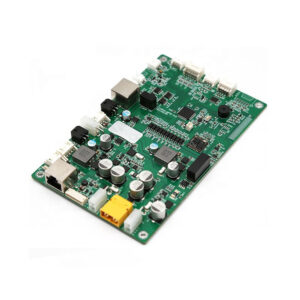
Sometimes multi-manufacturer quoting is not the best move. For early prototypes, complex PCBA, urgent delivery, or products where design data changes every 48 hours, a single turnkey supplier can be more efficient. Industry wrote in 2023 about turnkey PCB manufacturing and assembly from a single facility, and the core argument is practical: fewer handoffs, fewer communication gaps, tighter DFM/DFA control.
That does not mean single-supplier sourcing is always safer. It means the buyer must know what stage the project is in.
Prototype stage? Speed and engineering feedback may beat unit price.
Pilot run? Quote comparison should include quality response, DFM comments, and small-batch stability.
Mass production? Then PCB manufacturing quote comparison becomes a cost-control tool, but only after the specification is frozen.
For example, a buyer working on a custom multilayer PCB and PCB assembly OEM supplier service project should not only compare the bare PCB cost. They should compare whether the supplier can handle BOM sourcing, SMT, testing, packaging, and post-assembly failure analysis.
Cheap fabrication plus chaotic assembly is not a saving.
It is a delayed invoice.
The Best Negotiation Weapon Is a Better RFQ Package
Most buyers want a magic sentence. There is no magic sentence.
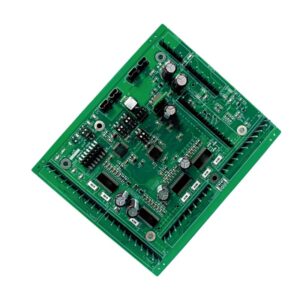
The strongest negotiation tool is a clean RFQ package that makes suppliers quote the same thing. For a serious PCB quotation strategy, I would include:
Gerber RS-274X or ODB++
Drill file
Stack-up drawing
Material requirement
Finished thickness
Finished copper
Surface finish
Solder mask color
Silkscreen color
Impedance table
IPC class requirement
UL/RoHS/REACH requirement
Panelization request
Annual forecast
Prototype quantity and production quantity
Target delivery date
Shipment term
Application category
If the PCB has BGA pads, via-in-pad, blind vias, HDI, heavy copper, aluminum substrate, Rogers material, or controlled impedance, say it clearly. Do not let the supplier guess. Guessing is expensive.
For BGA-heavy prototypes, a reference like multilayer PCB prototype with BGA pads and gold finish fits the kind of project where surface finish, solderability, pad geometry, and inspection method should be part of the quote discussion from day one.
How to Push Price Down Without Looking Like a Bad Customer
A bad buyer says: “Your price is too high.”
A good buyer says: “Please show which cost driver is highest: material, copper, drilling, surface finish, testing, delivery time, or panel utilization.”
That one sentence changes the whole negotiation. It moves the conversation from emotion to engineering.
If the supplier says material is the driver, ask about approved alternatives. If drilling is the driver, ask whether via count, hole size, or stack-up is causing it. If surface finish is the driver, ask whether ENIG is truly required or if OSP/HASL can pass the application. If delivery is the driver, ask for a normal lead-time quote and an express quote separately.
The Industry article on PCB procurement cost reduction and negotiation tactics points in the right direction: cost reduction is not only bargaining; it is specification control, supplier comparison, and process judgment. I would make it even sharper. If the supplier cannot explain the cost driver, I do not fully trust the quote.
Maybe the price is real. Maybe it is a guess.
And guesses become disputes.
A Practical Scoring Model for PCB Quote Comparison
Use a weighted model. Not because it is perfect. Because it stops the loudest number from winning too early.
| Evaluation Factor | Weight | What to Check | Red Flag |
|---|---|---|---|
| Technical match | 30% | Material, stack-up, copper, impedance, finish | Supplier ignores special notes |
| Total cost | 25% | Unit price, tooling, test, freight, duty | Low unit price with hidden fees |
| Lead time reliability | 15% | Production days, EQ timing, shipment term | “Fast” but undefined start date |
| Quality system | 15% | AOI, E-test, X-ray for BGA, IPC class | No inspection detail |
| Communication | 10% | DFM speed, engineering questions, quote clarity | Sales reply only, no technical feedback |
| Scale fit | 5% | Prototype, pilot, mass production capacity | Good prototype shop, weak volume plan |
I would not give price more than 25% in the first round for technical PCBs. For simple 2-layer FR-4 PCB with common specs, yes, price can weigh more. But for 4-layer, 6-layer, HDI, heavy copper, aluminum PCB, impedance control, or BGA work, price alone is too narrow.
The Hard Truth About “Best PCB Manufacturer Quote”
The best PCB manufacturer quote is usually not the cheapest first quote.
It is the quote that survives questions.
Ask the supplier to confirm the stack-up. Ask them what they changed from your file. Ask if they need EQ before production. Ask which specification increases cost the most. Ask what happens if the annual volume rises from 500 pcs to 5,000 pcs. Ask whether the same price holds for repeat orders. Ask if the lead time is affected by solder mask color, copper thickness, or ENIG line capacity.
A weak quote gets defensive.
A strong quote gets clearer.
That is the difference.
FAQs
What is PCB quote comparison?
PCB quote comparison is the process of checking multiple PCB manufacturer quotations against the same technical, quality, delivery, and commercial requirements so buyers can identify the real total cost, not just the lowest unit price. It compares material, copper, finish, testing, lead time, tooling, freight, and supplier risk.
In practice, it means you should not compare Supplier A’s $1.20 PCB against Supplier B’s $1.36 PCB until you know both quotes include the same FR-4 grade, finished copper, ENIG/HASL/OSP finish, electrical test, IPC requirement, and delivery term.
How many PCB manufacturers should I ask for quotes?
A practical PCB sourcing strategy usually starts with three to five manufacturers because that range gives enough market visibility without creating too much quote noise. Fewer than three quotes can hide price distortion, while more than five often wastes time unless the order is high-volume, urgent, or technically difficult.
For a standard 2-layer PCB, three suppliers may be enough. For 6-layer impedance control, HDI, aluminum PCB, or BGA-heavy designs, five quotes can reveal whether one supplier is underpricing risk or another is overpricing uncertainty.
How do I negotiate PCB pricing without lowering quality?
PCB pricing should be negotiated by identifying the cost driver first, then adjusting specifications, quantity, lead time, panelization, material options, or surface finish without weakening the product’s required performance. The goal is not to force a discount; the goal is to remove avoidable cost from the manufacturing path.
For example, changing ENIG to OSP may work for some products but not for fine-pitch BGA or long storage needs. Reducing lead-time pressure may cut express fees. Improving panel utilization may lower cost without touching quality.
Why do PCB quotes from different suppliers vary so much?
PCB quotes vary because suppliers may interpret the same file differently, use different material assumptions, include or exclude testing, price different lead times, or apply different risk margins based on their own process capability. A quote gap does not always mean one supplier is greedy or another is cheap.
The gap may come from Tg150 vs Tg170 laminate, 1 oz vs 2 oz finished copper, ENIG vs HASL, included vs excluded impedance control, different panel utilization, or whether 100% electrical testing is included.
What should be included in a PCB RFQ?
A complete PCB RFQ should include Gerber or ODB++ files, drill data, stack-up, material, thickness, copper weight, surface finish, solder mask, silkscreen, impedance requirements, IPC class, quantity, delivery date, panelization needs, testing requirements, shipment term, and any compliance requirements such as RoHS or UL.
The more specific the RFQ, the less room suppliers have to guess. And when suppliers guess, buyers usually pay for that uncertainty through higher prices, later engineering questions, or production disputes.
Is the cheapest PCB quote ever the best choice?
The cheapest PCB quote can be the best choice only when the technical specification is simple, all quote assumptions are equal, and the supplier clearly includes the same quality checks, lead time, tooling, and shipping terms as competitors. For complex PCBs, the lowest number often hides excluded items or underestimated production risk.
A cheap quote is acceptable when it is transparent. It is dangerous when the supplier cannot explain material, copper, finish, test, yield, or lead-time assumptions.
Conlusion
Before you push a supplier for a lower PCB price, make the quote comparable first.
Send the same controlled RFQ package. Ask every manufacturer to confirm material, copper, surface finish, testing, lead time, tooling, and freight. Then negotiate the cost driver, not the whole quote blindly.
If you are comparing multilayer PCB, BGA PCB, PCBA, or production-ready OEM projects, share the Gerber files, BOM, stack-up, quantity, and delivery target with MCHDIPCB. We can review the manufacturability, identify cost drivers, and help you build a quote that is clear enough to compare and strong enough to negotiate.
