













Market Trends
Prototype Assembly: In-House vs Outsourced Strategy
Jun
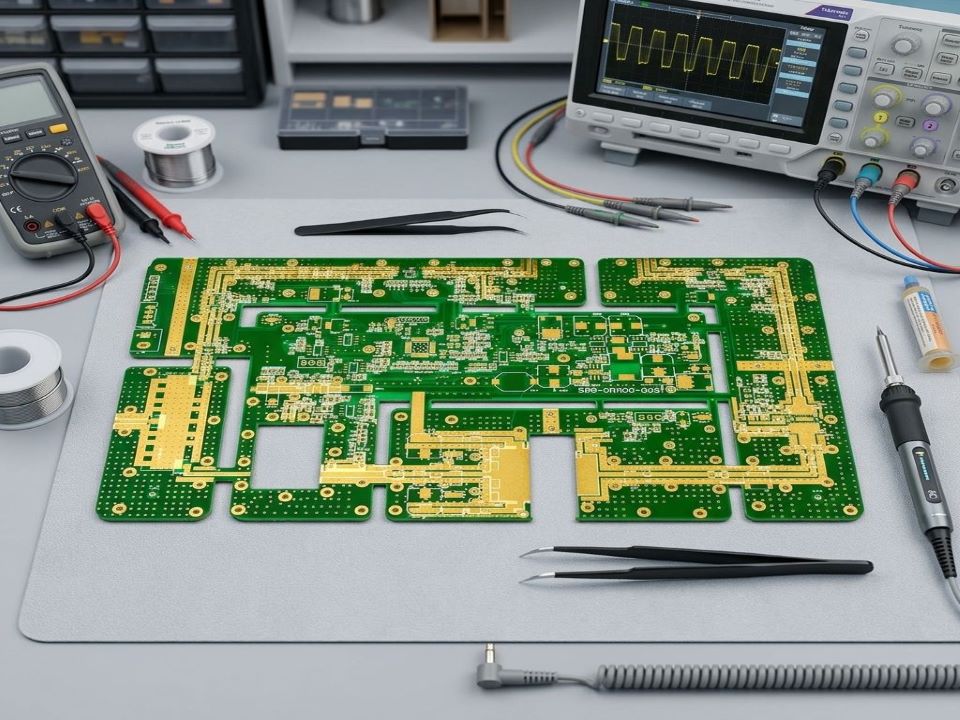
Prototype PCB Assembly looks simple from a distance.
It is not.
I have seen engineers argue for in-house assembly because “we only need five units,” and I have seen purchasing teams outsource everything because they think factory equipment automatically means factory discipline. Both sides can be wrong, sometimes expensively wrong. The real question is not whether you can place components on a PCB. The question is whether your prototype assembly method protects the project schedule, the design truth, and the next production decision.
That is the part nobody wants to say out loud.
A prototype is not a smaller version of mass production. It is a test of assumptions: footprint accuracy, BOM availability, solderability, thermal behavior, impedance risk, mechanical fit, firmware bring-up, and sometimes the customer’s patience. So when we talk about in-house PCB assembly versus outsourced PCB assembly, we are not choosing between “cheap” and “professional.” We are choosing where the mistakes should happen, who should catch them, and how much delay the team can survive.
The Hard Truth: In-House Assembly Is Fast Until It Is Not
In-house assembly feels powerful because it removes the waiting room.
You have the PCB. You have the components. Someone on the engineering bench can place the parts, reflow a few samples, repair two bridges under the microscope, and hand the unit to firmware before lunch. Beautiful. For early electronics prototype manufacturing, that speed can be real, especially when the PCB is simple, the BOM is small, and the team is still proving whether the circuit works at all.
But here is the dirty detail: in-house assembly often hides process defects as engineering problems.
A marginal solder joint becomes a firmware mystery. A tombstoned 0402 becomes a “power rail instability.” A hand-reworked QFN pad becomes a thermal complaint. And because everyone is standing close to the prototype, people start trusting the unit emotionally. That is dangerous.
I like in-house assembly for proof-of-concept PCBs, low-density sensor modules, simple power boards, and first electrical smoke tests. For example, if a team is testing a basic single-layer power circuit, an internal bench build can make sense before moving toward a more controlled FR-4 single-sided power PCB prototype build.
But once the PCB carries fine-pitch ICs, controlled impedance, dense passives, BGA, FPC connectors, high-current copper, or thermal-sensitive packages, in-house assembly starts becoming theater. It looks fast. It may not be reliable.
Outsourced Prototype PCB Assembly Is Not Just Labor
Outsourced PCB assembly gets misunderstood.
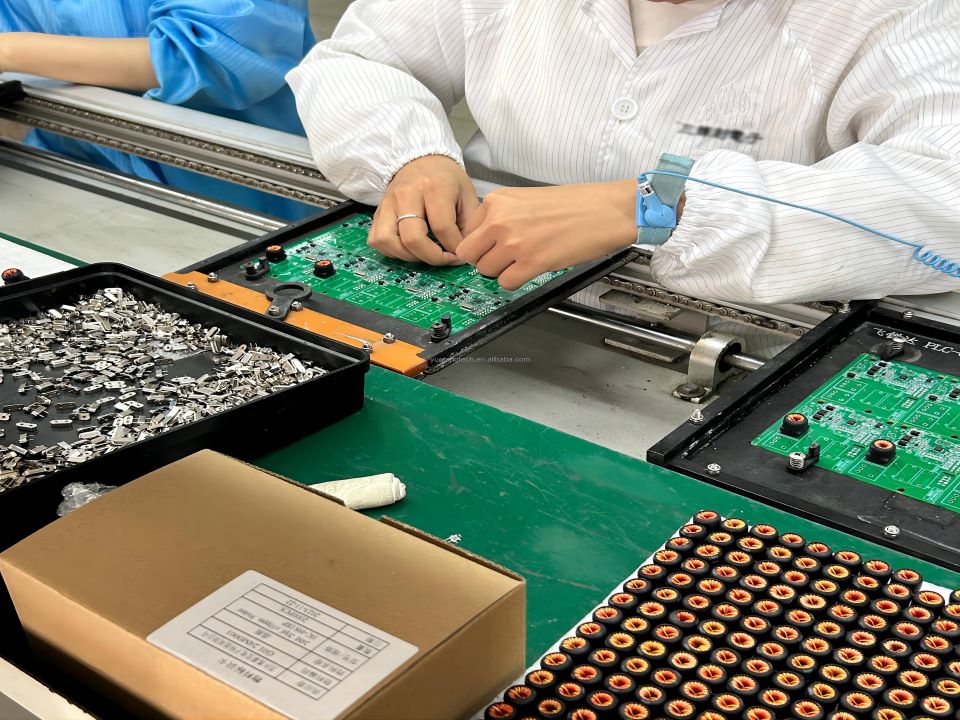
Many buyers think they are paying for soldering. They are not. They are paying for process memory: solder paste control, stencil design, placement accuracy, reflow profile discipline, AOI logic, X-ray judgment, component sourcing checks, and repair records. In good factories, even a five-piece prototype build receives more process attention than many engineering benches can realistically provide.
That matters.
IPC’s 2024 electronics manufacturing sentiment data showed continued pressure from labor cost, material cost, backlog, and capacity utilization swings. In plain language: the factory side of the industry was still unstable, and that instability affects prototype assembly quotes, lead times, and component availability. So a serious outsourced assembly partner is not just a “vendor.” It is a filter between your design files and a messy supply chain.
This is especially true for turnkey prototype assembly, where the supplier handles PCB fabrication, component procurement, SMT assembly, inspection, and sometimes functional testing. It costs more than “send us bare PCBs and we will solder parts,” but it also reduces the number of places where blame can hide.
And blame hides well.
One factory says the PCB pads were wrong. The component distributor says the parts were correct. The assembly house says the footprint was not suitable. The engineer says the datasheet was ambiguous. The buyer says everyone is late. If one supplier handles fabrication and assembly together, at least the failure chain becomes easier to trace.
For multilayer designs, this matters even more. A prototype with 4-layer or 6-layer stack-up, impedance traces, via-in-pad concerns, or mixed signal routing should not be treated like a hobby board. It belongs closer to a controlled multilayer printed circuit board PCB manufacturing flow than a casual bench experiment.
The Cost Comparison Most Buyers Get Wrong
Prototype assembly cost comparison is usually done badly.
People compare only the quotation line: in-house labor looks free, outsourced labor looks expensive. That is accounting fiction. Internal engineering time is not free. Failed samples are not free. Re-ordering missing components is not free. Rebuilding five units because one footprint was wrong is not free. Delaying firmware validation by one week is definitely not free.
Here is the more honest cost model:
| Decision Factor | In-House PCB Assembly | Outsourced PCB Assembly |
|---|---|---|
| Best use case | Early proof-of-concept, simple PCB, fast electrical check | Dense SMT, BGA/QFN, small batch validation, customer samples |
| Visible cost | Lower at first | Higher quotation cost |
| Hidden cost | Engineer time, rework, inconsistent quality, weak traceability | Communication time, shipping time, supplier management |
| Speed advantage | Very fast for simple builds | Faster for complex builds if supplier is experienced |
| Quality control | Depends on internal tools and operator skill | AOI, X-ray, reflow profiling, process documentation |
| BOM control | Good if parts are already in hand | Better for turnkey sourcing and shortage substitution |
| Failure analysis | Often informal | More structured if supplier records process data |
| Risk level | Low for simple PCBs, high for fine-pitch designs | Lower for complex PCBs, if files are reviewed properly |
| Best strategic role | Learning fast | Validating manufacturability |
The uncomfortable truth is this: in-house assembly is cheaper only when the PCB is forgiving.
Once the design moves into fine-pitch SMT, HDI, high-speed routing, rigid-flex structure, or thermal-heavy layouts, the “cheap” internal build can become a slow argument with physics. For example, a rigid-flex prototype with blind vias, controlled bend areas, and dense interconnects should be treated as a manufacturing-risk project from day one, not as a bench soldering task. In that case, using an experienced advanced rigid-flex HDI multilayer PCB manufacturer is not luxury. It is damage control.
When In-House Prototype Assembly Makes Sense
Let me be fair.
In-house PCB assembly has a real place. I would use it when the engineering team needs immediate learning, not polished samples. If the goal is to confirm that a voltage regulator starts correctly, a sensor interface responds, or a connector pinout is acceptable, building two or three rough units internally can be smart.
Small mistakes are useful here.
A hand-assembled prototype can expose schematic errors before the team spends money on formal prototype PCB assembly services. It can also help firmware engineers start earlier, especially when the mechanical enclosure or product appearance is not yet fixed. For startups, this can save emotional energy as much as money.
But the boundary must be clear.
In-house assembly should not be used to prove production readiness. It should not be used to impress a customer unless the customer understands it is an engineering sample. It should not be used to validate yield. And it should not be used to judge whether a supplier can mass produce the PCB.
A bench-built unit is evidence that the circuit may work. It is not evidence that the product is ready.
When Outsourced PCB Assembly Is the Smarter Strategy
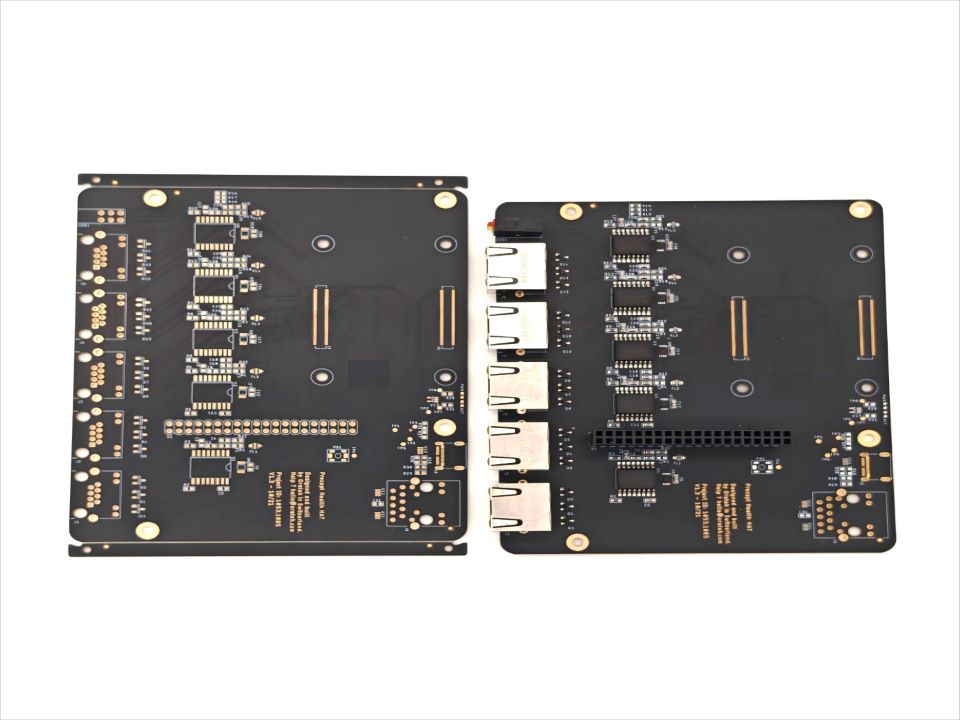
Outsource when the prototype has to represent reality.
That means customer samples, investor demos, certification preparation, pilot runs, thermal validation, field testing, and anything that may influence a production decision. If the prototype must answer “Can this be manufactured repeatedly?” then outsourced PCB assembly becomes the stronger route.
This is also where component sourcing matters.
In 2024, electronics manufacturers were still dealing with labor cost pressure, material cost volatility, and uneven supply conditions. A professional assembly partner can check BOM risks earlier: obsolete parts, long lead-time ICs, mismatched packaging, moisture-sensitive devices, substitute availability, and reel quantity problems. A buyer may only see “part available online.” A factory sees whether the part can actually be placed, baked, inspected, and repeated.
For flexible electronics, this difference is sharp. FPC assembly often involves connector stress, PI material behavior, stiffener location, bending reliability, and pad adhesion risk. If your product depends on thin cable routing, wearable electronics, camera modules, or compact device interconnects, you should treat polyimide FPC flexible flat cable PCB manufacturing as a specialized process, not a normal FR-4 variation.
And for aluminum PCBs, the trap is different.
A simple LED or power prototype can look easy, but thermal transfer, dielectric thickness, copper weight, solder mask behavior, and mounting flatness affect performance. If the product is heat-driven, a controlled single-sided aluminum PCB prototype process is usually more useful than a rough internal build.
The Strategic Split I Actually Recommend
Here is my opinion.
Use in-house assembly to learn. Use outsourced prototype PCB assembly to decide.
That split sounds simple, but it prevents many bad decisions. The first few hand-built units can help engineers catch obvious design errors. Then, once the schematic and layout are mature enough, outsource a small batch under a controlled process. That outsourced batch becomes the bridge between engineering imagination and manufacturing reality.
The best teams do not ask, “Which option is cheaper?” They ask:
Can this prototype tolerate process variation?
Will this sample be shown to a customer?
Do we need AOI, X-ray, or controlled reflow data?
Is the BOM stable enough for turnkey sourcing?
Are we testing circuit logic, manufacturability, or production readiness?
Is the PCB simple enough to repair without corrupting test results?
That last question is underrated.
Some prototypes become useless after too much rework. The PCB still powers on, but its evidence value is damaged. Heat cycles change solder joints. Lifted pads change impedance. Flux residue creates leakage paths. Hand-reworked fine-pitch packages may pass today and fail after vibration. So yes, the unit “works.” But what does it prove?
Sometimes not much.
Prototype Assembly Strategy by PCB Type
Different PCBs deserve different assembly strategies. Treating all prototypes the same is lazy buying.
| PCB Type | In-House Strategy | Outsourced Strategy | My Take |
|---|---|---|---|
| Simple FR-4, low-density | Good for first electrical test | Use for customer samples or small batch | Start in-house, validate outside |
| FPC / flexible PCB | Risky unless team has process experience | Strongly recommended | Outsource earlier |
| Aluminum PCB / MCPCB | Possible for very simple LED test | Better for thermal validation | Outsource before performance testing |
| HDI / rigid-flex | Not recommended for serious validation | Strongly recommended | Outsource almost always |
| Multilayer high-speed PCB | Possible only for rough bring-up | Needed for impedance and repeatability | Outsource once layout stabilizes |
| Automotive or PoE control PCB | Not ideal for final validation | Better for process traceability | Outsource before field testing |
Automotive and PoE-related prototypes deserve extra caution because they often combine power, communication, thermal behavior, and reliability expectations. A prototype for an ECU, PoE control module, or vehicle electronics project should move toward a controlled PoE ECU control PCB manufacturing process before field validation.
One failed lab sample is annoying. One failed field sample can damage trust.
The Supplier Question Nobody Asks Early Enough
Most teams ask suppliers, “How much and how fast?”
Wrong first question.
The better question is: “What will you check before you assemble it?”
A good prototype assembly supplier should talk about DFM review, stencil aperture suggestions, component polarity, BOM packaging, moisture-sensitive parts, solder paste type, panelization, test points, BGA inspection, and rework limits. If the supplier only says “send Gerber and BOM,” be careful.
For prototype PCB assembly services, the review stage is where a supplier earns money before the line even starts. A factory that catches one wrong footprint or unavailable package can save more money than a cheaper assembly quote ever will.
And yes, this is where procurement sometimes gets in the way.
A buyer trained only to compare unit price may reject the supplier that asks hard technical questions. That is a mistake. In prototype work, questions are not delays. Questions are insurance.
FAQ
What is Prototype PCB Assembly?
Prototype PCB Assembly is the process of mounting electronic components onto a small batch of prototype printed circuit boards to verify circuit function, manufacturability, component fit, and early product performance before larger production begins. It may include SMT assembly, through-hole assembly, BOM sourcing, inspection, rework, and basic functional testing.
In practical terms, it is the point where design files become physical evidence. A good prototype assembly run should tell you whether the circuit works, whether the PCB can be assembled cleanly, and whether the design is ready for a pilot batch.
Is in-house PCB assembly cheaper than outsourced PCB assembly?
In-house PCB assembly is cheaper only when the design is simple, the components are easy to place, and the team already has the tools, skills, and spare engineering time to build samples without corrupting test results. For dense SMT, BGA, FPC, HDI, or customer-facing prototypes, outsourcing often reduces total project cost.
The mistake is comparing only invoice cost. Internal labor, rework, failed samples, delayed testing, and unclear failure analysis all belong in the real cost model.
When should a company outsource prototype PCB assembly?
A company should outsource prototype PCB assembly when the prototype must represent real manufacturing conditions, customer sample quality, repeatable soldering, controlled inspection, or production-readiness data. Outsourcing is especially recommended for fine-pitch SMT, BGA, QFN, HDI, rigid-flex, aluminum PCB, and multilayer high-speed PCB projects.
If the sample will guide purchasing, certification, pilot production, or field testing, it should not depend only on bench-level assembly.
What is the difference between turnkey prototype assembly and consigned assembly?
Turnkey prototype assembly means the supplier handles PCB fabrication, component sourcing, SMT assembly, inspection, and sometimes testing, while consigned assembly means the customer provides some or all components and the supplier mainly performs assembly. Turnkey reduces coordination risk, while consigned assembly gives the customer more sourcing control.
Turnkey is usually better when the buyer wants one accountable supplier. Consigned assembly can work well when expensive ICs, programmed chips, or controlled inventory must stay with the customer.
How do I choose between in-house and outsourced PCB assembly?
Choose in-house assembly when the goal is fast engineering learning on a simple PCB, and choose outsourced assembly when the goal is manufacturability validation, customer-ready samples, process repeatability, or production planning. The decision should be based on design complexity, test purpose, inspection needs, BOM risk, and schedule tolerance.
My rule is simple: build inside to discover obvious problems; outsource to confirm whether the design deserves production money.
What files are needed for prototype PCB assembly services?
Prototype PCB assembly services usually require Gerber files, drill files, BOM, pick-and-place data, assembly drawings, PCB specifications, component polarity notes, and any special testing or programming requirements. For complex designs, stack-up details, impedance requirements, panelization preferences, and approved substitute rules should also be provided.
The cleaner the file package, the fewer assumptions the factory has to make. Fewer assumptions usually means fewer surprises.
Conclusion
Prototype assembly is not just a step after PCB fabrication. It is the moment your design starts telling the truth.
If your project is still rough, build a few units in-house and learn fast. But if the PCB is moving toward customer samples, pilot production, or real market testing, use outsourced prototype PCB assembly with proper DFM review, BOM checking, assembly control, and inspection.
At MCHDIPCB, we support prototype PCB assembly for FR-4, multilayer, aluminum PCB, FPC, rigid-flex, HDI, and application-specific electronics projects. Send us your Gerber, BOM, and assembly requirements, and we can help check whether your project is better suited for quick prototype assembly, turnkey sourcing, or a controlled small-batch build.
