













Industry Applications
Proto-Grade vs Production-Grade PCB Specs
Jun
A consumer once told me, “The prototype already works, just quote manufacturing with the very same documents.”
I looked at the stack-up note for some time.
No laminate brand. No last copper callout. No IPC class. Insusceptibility was written like an afterthought. The drill table was fine, the Gerber opened typically, and of course, the model most likely did power up on the bench. But production? Different story.
This is where PCB Requirements begin to matter. Not in the nice marketing method. In the excruciating manufacturing facility way.
A model documents can be an illustration with copper. A production file needs to behave like an agreement between engineering, purchasing, fabrication, assembly, and whoever has to answer the angry email later.
Little distinction. Big price.
Model Specifications Are Allowed to Be Unpleasant
I don’t hate rough prototype specifications.
Actually, I anticipate them.
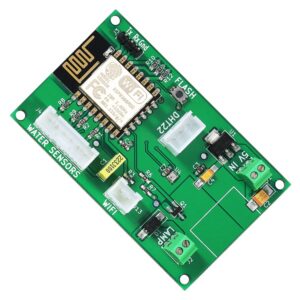
At the model stage, the engineer is still relocating things about.Perhaps the connector position changed due to the fact that the real estate transformed. Perhaps the MCU impact was duplicated from an old job.Perhaps firmware is not secure yet, so nobody even recognizes whether the warm is from the layout or the code.That’s normal job, okay work.
For this phase, a personalized PCB board prototype manufacturing service manufacturing facility must be quick, receptive, and truthful concerning apparent DFM catches. The objective is not to generate a museum-quality file.For this phase, a personalized PCB board prototype manufacturing service manufacturing facility must be quick, receptive, and truthful concerning apparent DFM catches. The objective is not to generate a museum-quality file.The goal is to obtain functional PCBs quickly enough for engineers to solder, examination, revamp, whine, and modify.The goal is to get usable PCBs fast enough for engineers to solder, test, rework, complain, and revise.
Model PCB specs are frequently adequate when they respond to the instant inquiry: can this circuit work?
Yet that’s all.
Five working examples do not prove the board awaits repeat manufacturing. They only prove that a little set made it through one slim window. Perhaps the plating was fortunate.Maybe the panel balance was acceptable only because the quantity was tiny. Maybe the panel equilibrium served just since the amount was little. Maybe the through layout is waiting to fail after more thermal biking.
That takes place.
Production Specifications Are Less Flexible
Manufacturing is not a bigger model.
You need to go through your ask for quotation thing by product, comparing it to the info in that row.
Production-grade PCB specs must plainly identify the aspects that impact repeatability: ended up copper, through therapy, layer stack-up, laminate, insusceptibility, solder mask, approval requirements, examination, product packaging, and variation. Not due to the fact that manufacturing facilities enjoy asking concerns. Most don’t. They ask since vague specifications end up being scrap, revamp, postponed distribution, or a quality dispute no one desires.
For industrial electronics, particularly control boards, I ‘d anticipate a vendor doing B2B multilayer PCB manufacturing for commercial control to inquire about dielectric density, copper balance, by means of dependability, insulation spacing, E-test, AOI, and last top quality records.
If the supplier never ever asks anything, that may feel comfy initially.
I would certainly still beware.
A peaceful “OK” is not always good service. Sometimes it implies the factory is just quoting what is visible and neglecting what is high-risk.
The Genuine Trouble Is Generally In Between Design and Purchasing
Here is the part people don’t like saying.
Engineering understands the model documents is not perfect.
Purchasing often doesn’t. Purchasing sees “example authorized,” after that begins looking for far better unit cost, much faster lead time, and another 5% discount. The old prototype package obtains forwarded to 3 factories, and all of a sudden everybody is acting it is a production-ready documents set.
It isn’t.
The factory after that has two selections.One, ask questions and look tough. Two, quote fast and wish the work doesn’t attack later.
From my experience, the better factories pick the initial alternative. They may annoy you, but they secure you. The weak ones typically pick the second choice due to the fact that it makes the RFQ step faster.
Rapid can be costly.
Particularly when no one has defined what “appropriate PCB high quality” suggests before delivery.Especially when nobody has defined what “acceptable PCB quality” means before shipment.
Proto-Grade vs Production-Grade PCB Specs
| Specification Area | Proto-Grade PCB Specifications | Production-Grade PCB Specifications | Why It Matters |
|---|---|---|---|
| Main goal | Fast validation and design learning | Repeatability, yield, reliability, and traceability | Prototype proves concept; production protects revenue |
| Quantity logic | 5–100 pcs, often changing | 500–50,000+ pcs, controlled release | Small samples hide process variation |
| Material control | Equivalent FR-4 may be acceptable | Locked laminate brand, Tg, Td, Dk, Df, CTI, UL rating | Material drift changes thermal, RF, and reliability behavior |
| Stack-up | Flexible if function allows | Controlled dielectric thickness, copper balance, impedance plan | Stable stack-up prevents signal and assembly surprises |
| Copper requirement | Nominal copper often enough | Finished copper thickness clearly defined | Plating tolerance affects current, heat, and via life |
| Surface finish | Chosen for convenience or assembly | Selected by shelf life, bonding, fine pitch, corrosion, and cost | ENIG, OSP, HASL, immersion silver all carry trade-offs |
| Inspection | Basic AOI and electrical test | AOI, E-test, microsection, impedance coupon, CoC, lot records | Production needs proof, not trust |
| Acceptance standard | Often informal | IPC-A-600 / IPC-6012 Class 2 or Class 3 defined | Without acceptance rules, disputes become emotional |
| Change control | Engineering changes expected | ECO, revision lock, approved deviation process | Silent changes create field failures |
| Best supplier type | Fast-response prototype partner | Process-controlled manufacturing partner | The cheapest prototype shop may not be the safest production source |
“FR-4, 1.6 mm, 1 oz” Is Not a Production Specification
That line looks safe.
It isn’t always safe.
For a fast prototype, “FR-4, 1.6 mm, 1 oz” might be enough. For production, it can be too loosened. FR-4 can suggest conventional Tg, high-Tg, halogen-free, CAF-resistant, low-loss, automotive-grade, and numerous “comparable” products that do not behave the very same after lead-free reflow, wetness direct exposure, or long running hours.
A custom-made halogen-free FR-4 multilayer control PCB distributor ought to have the ability to say what product is being utilized, not just “excellent FR-4.” Great compared to what? What Tg? What CTI? What UL file? What material system? Is it actually halogen-free, or simply “similar sufficient” in someone’s quote sheet?
This is the boring component of PCB acquiring.
It is additionally where several production troubles begin.
RF and High-Frequency Boards Subject Careless Specs Fast
RF PCBs don’t offer much room for unclear language.
The PCB becomes part of the circuit, not just an environment-friendly carrier for parts.Dk, Df, copper roughness, dielectric thickness, glass weave, prepreg option, solder mask placement, and impedance coupon design can all alter efficiency.A model may still pass a basic examination.Production might not be so kind.
If a layout needs Rogers RO4003C or one more high-frequency laminate, don’t delicately write “equivalent accepted” unless design has actually authorized that material replacement. A proper Rogers 4003 RF PCB distributor for high-frequency applications ought to speak about stack-up control, copper kind, resistance resistance, dielectric thickness, and screening before the order is put.
Not after.
After is when the debate starts.
Flex PCB Is a Separate Animal
Flex looks simple on a drawing.
Then it bends.
Rigid PCB buyers sometimes underestimate flex PCB specifications because the shape seems easy: thin circuit, gold fingers, maybe a stiffener, maybe a connector tail. But flex production has its own traps: RA copper vs ED copper, adhesive vs adhesiveless PI, bend radius, coverlay opening, stiffener thickness, gold thickness, dynamic bending area, and panel support during SMT.
A prototype flex can survive a hand test and still fail in the real product after repeated movement.
That is why a gold-plated FPC panel supplier should not treat flex like thin FR-4. The process window is different. Handling is different. Failure is different.
Flex usually fails quietly first.
Then it becomes obvious.
Medical and Automotive PCBs Need Earlier Discipline
“Only prototype” is not a free pass.
One key consideration for prototype PCB specifications is that if your product is used in the medical, automotive, industrial, robotics, power, or high-reliability sensing sectors, you must carefully plan your future production route. If you fail to keep this in mind, minor details such as an incorrect laminate structure, through-holes, or surface finishes will become the sharpest obstacles on your path to mass production.
I have seen teams save money on the first prototype and then spend weeks redesigning because the sample path was never production-friendly.
Great saving. Bad result.
For high-reliability electronics, a supplier familiar with medical HDI PCB requirements for high-reliability devices should ask about microvia structure, traceability, inspection records, and process control. For vehicle-related electronics, an automotive electronics control PCB prototype supplier should help avoid early PCB choices that become expensive later.
That is not overthinking.
That is avoiding a redesign nobody budgeted for.
PCB Specification Checklist Before Production
| Checklist Item | What to Confirm Before Production | Common Mistake |
|---|---|---|
| Revision control | Gerber, drill, BOM, pick-and-place, drawing, and stack-up all carry the same revision | Old Gerber paired with new BOM |
| Laminate | Brand, Tg, Td, CTI, Dk/Df, halogen-free requirement, UL rating | “FR-4 equivalent” used too loosely |
| Finished copper | Inner and outer finished copper thickness, not only base copper | Confusing 1 oz base copper with final plated copper |
| Impedance | Target value, tolerance, layer, trace width, dielectric reference, coupon design | Asking for impedance after layout is frozen |
| Vias | Via type, plugging, filling, tenting, resin fill, copper cap, via-in-pad requirement | Treating via-in-pad like a normal via |
| Surface finish | ENIG, OSP, HASL, immersion tin, immersion silver, hard gold, selective finish | Choosing only by unit price |
| Solder mask | Color, type, dam limits, registration tolerance, via coverage | Fine-pitch pads with impossible mask dams |
| Testing | E-test, AOI, impedance test, microsection, ionic contamination if needed | Assuming “inspection” means everything |
| Acceptance | IPC class, cosmetic rules, warpage, bow/twist, repair limits | No agreed standard before shipment |
| Packaging | Vacuum packing, desiccant, humidity card, shelf-life label, lot marking | Moisture issues discovered at assembly |
IPC Class 3 Is Not a Sticker
Some buyers write IPC Class 3 because it sounds safer.
Fine. But then accept the cost and discipline that come with it.
IPC Class 2 is not “bad.” IPC Class 3 is not “perfect.” They are acceptance frameworks, not magic spells. A PCB with vague notes and a Class 3 request can still create confusion. A Class 2 board with clear material, stack-up, impedance, inspection, and reporting requirements may be much better controlled.
This is where PCB quality standards need to become measurable.
Annular ring. Hole wall copper. Surface finish thickness. Solderability. Ionic cleanliness. Bow and twist. Impedance tolerance. Solder mask registration. Repair limits. Microsection frequency. Outgoing report format.
If nobody can measure it, nobody can defend it later.
And later is usually too late.
How to Choose PCB Specifications for Prototype and Production
Start with risk, not price.
If the design is still changing, keep prototype PCB specifications practical. Focus on function, assembly fit, basic DFM, and the biggest unknowns. Don’t turn the first sample into a paperwork project just to look professional.
But when the order moves toward pilot run or production, stop treating the Gerber package like the whole story. Lock the laminate. Lock the stack-up. Define finished copper. Confirm impedance. Decide via treatment. Choose surface finish for the actual assembly and storage condition. Set inspection and acceptance rules before the PO.
Here’s my simple rule: if PCB failure can hurt delivery, warranty, safety, field reliability, assembly yield, or customer trust, you’re already in production-grade territory.
Even if the order quantity still looks small.
FAQs
What are PCB specifications?
PCB specifications are the documented material, dimensional, electrical, mechanical, inspection, and acceptance requirements used to manufacture a printed circuit board consistently. They define layer count, laminate, copper thickness, surface finish, stack-up, impedance, solder mask, testing, IPC class, packaging, and revision control.
In factory language, they tell the PCB shop what must be controlled and what can stay flexible. Weak specs leave too many decisions to the supplier. Strong specs reduce guessing before guessing turns into scrap.
What is the difference between prototype PCB specifications and production PCB specifications?
Prototype PCB specifications prioritize fast validation and design learning, while production PCB specifications prioritize repeatability, yield, traceability, and long-term reliability. Prototype specs can tolerate some uncertainty, but production specs must define materials, tolerances, testing, inspection, acceptance rules, and revision control.
Prototype asks whether the design can work. Production asks whether the same PCB can be built again and again without surprise losses. Similar files, different purpose.
When should I upgrade from proto-grade to production-grade PCB specifications?
You should upgrade to production-grade PCB specifications when the design revision is stable, the application risk is clear, and the next order quantity makes process variation expensive. This usually happens before pilot production, not after assembly problems appear.
A practical warning sign: if a PCB issue can delay shipment, scrap expensive components, hurt customer trust, or create warranty pressure, the specification is no longer just a prototype note.
Which PCB quality standards should production PCB specifications include?
Production PCB specifications should include the correct IPC acceptance class, usually IPC Class 2 for standard commercial electronics or IPC Class 3 for high-reliability applications. They should also define plating thickness, solderability, cleanliness, impedance tolerance, surface finish thickness, warpage limits, test method, and visual acceptance rules.
Don’t just write “IPC standard” and stop there. HDI, RF, flex, automotive, medical, and high-current PCBs all need product-specific fabrication notes.
How do material choices affect PCB fabrication specifications?
Material choices affect PCB fabrication specifications because laminate properties control thermal behavior, dielectric stability, mechanical strength, soldering durability, insulation reliability, and high-frequency performance. Tg, Td, Dk, Df, CTI, copper type, resin system, and halogen-free status can all change how the PCB behaves.
That is why “FR-4 equivalent” might be fine for a bench prototype but risky for production control PCBs, RF PCBs, medical PCBs, or automotive electronics.
How can buyers avoid production problems caused by weak PCB specifications?
Buyers can avoid production problems by treating PCB specifications as a manufacturing control document, not just an RFQ attachment. Before production, they should freeze the revision, confirm laminate, define stack-up, specify finished copper, approve impedance rules, set inspection requirements, and agree on acceptance standards.
Also ask the factory what is unclear. A serious PCB supplier should challenge missing data before production, not quietly accept vague files and let the batch expose the problem later.
Conclusion
If your prototype worked but the next order needs to survive real production, don’t send the same vague file package and hope the factory guesses correctly.
Send us your Gerber files, stack-up, BOM, application background, target quantity, and quality requirements. We can review whether your current PCB Specifications are still proto-grade or ready for production—and help adjust the details before cost, lead time, or reliability becomes the problem.
